
Delicate hand tattoos for women usually raise one question first: can a small design stay crisp without turning the session into a marathon? I once chose placement before checking how the skin moves. That mistake taught me to weigh line weight, meaning, and aftercare together. These ideas keep the look striking and manageable.
- Start with Small Fine-Line Floral Hand Tattoos
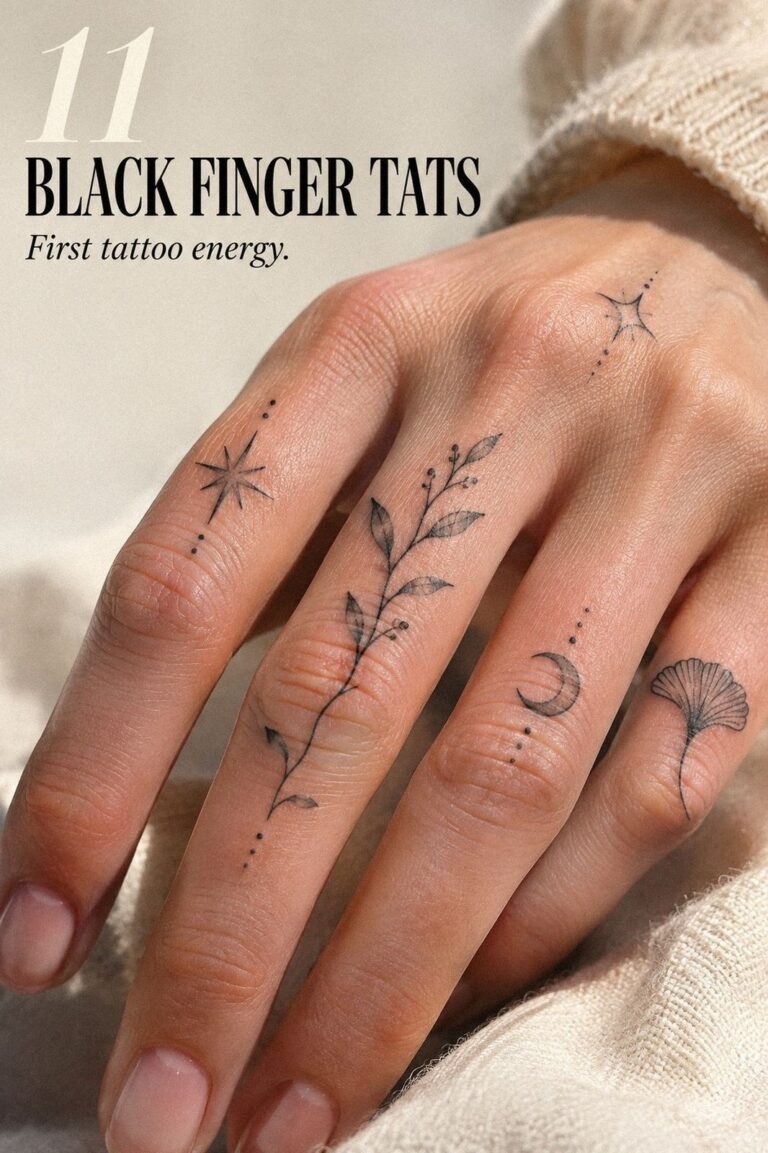
- What Makes Tiny Finger Botanical Symbols Meaningful?
- Trace a Wrist-to-Hand Design in Crisp Black Linework
- Luna Motifs: Feminine Hand Tattoos with Graceful Moon Phases
- Build Dainty Knuckle Tattoos from Star Constellations
- Honor Sacred Geometric Details with Intricate Palm Ink
- Keep Minimal Side-Hand Tattoos in an Elegant Single-Needle Style
- Pair Romantic Script with Flowing Vines
- Sharpen an Edgy Hand Tattoo with Micro Symbols
- Colorful or Monochrome? Choose Playful Miniatures Carefully
- Choose Timeless Botanical Engraving with Vintage Texture
1Start with Small Fine-Line Floral Hand Tattoos
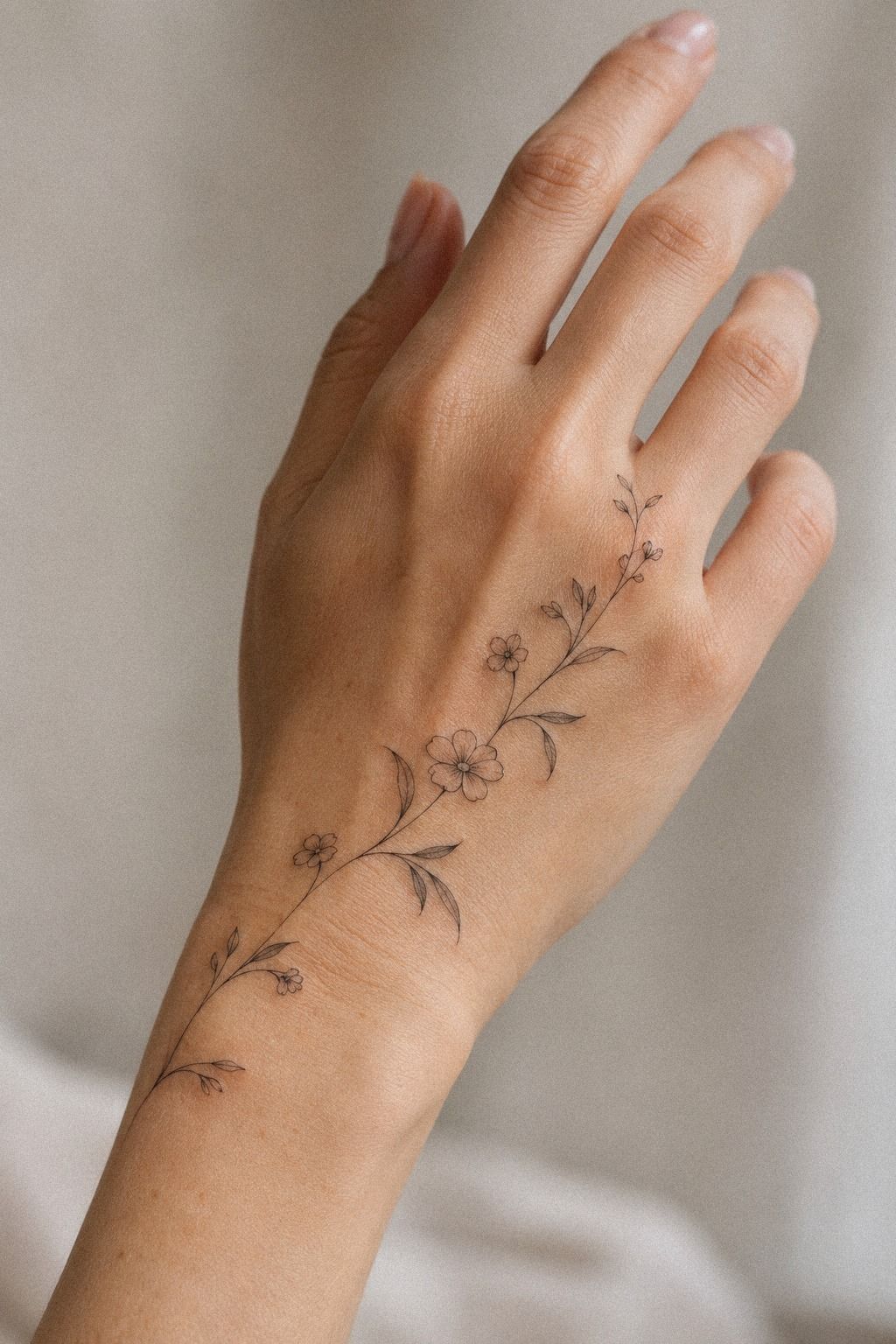
A intricate floral sprig suits the back of the hand when you want something detailed without filling every inch of skin. You’ll want the artist to leave clear space between each bloom, especially when the design includes thin stems or open petals.
The most graceful stem has one main branch, two smaller leaves, and a few hair-thin petals. I’d skip a crowded bouquet because details can blur as the tattoo ages. A single wildflower sprig gives your hand movement without making the design look busy.
Ask your artist to show healed examples, not only freshly completed work. You’re looking for crisp curves, even pressure, and petals that still read after the skin settles. A 1-inch to 2-inch design can look intentional when the spacing is right, but your artist should choose the final scale for your skin.
If you’re comparing placements, browse these small hand tattoos for women before booking. You’ll also want to consider how fine-line florals may respond to sunlight, friction, and frequent hand washing.
The cost can be worth it when the artist has consistent healed work. I’d rather pay a fair minimum for one careful floral tattoo than choose the cheapest option and spend more later on corrections.
2What Makes Tiny Finger Botanical Symbols Meaningful?

Tiny finger designs work best when the symbol has a meaningful placement and a clear reason behind it.
A leaf, seed, tiny sprig, or symbolic flower can carry a private story without needing much space. I’d choose one recognizable shape instead of combining several unrelated icons.
3Trace a Wrist-to-Hand Design in Crisp Black Linework

A wrist-to-hand design gives you more room for a crisp composition than a tiny finger mark. It can begin near the wrist and travel toward the thumb, index finger, or center of the hand.
You’ll want the composition to follow your natural movement. I’d test the stencil with my wrist bent, palm open, and fingers relaxed. A line that looks perfect in one position can feel crooked when your hand changes angle.
A narrow branch, ribbon, constellation, or abstract wave can create a flowing connection between two placements. Your artist should consider where the design narrows and where it needs stronger marks.
The price may rise with placement complexity, but the extra planning can be worth it. You’re paying for a tattoo that works in motion, not only during the appointment.
Before booking, compare geometric hand tattoo ideas and small hand wrist tattoos. I’d save only the references that match your skin, scale, and actual style.
4Luna Motifs: Feminine Hand Tattoos with Graceful Moon Phases

A crescent moon with a few stars can look romantic when the spacing stays deliberate.
You might choose matching phases, a single crescent, or a moon paired with one meaningful dot. Keep the marks simple enough to remain readable as your hand moves.
5Build Dainty Knuckle Tattoos from Star Constellations

Knuckle constellations are best treated as a series, not four separate mini tattoos. You’ll want the knuckle alignment checked with your fingers bent, straight, and naturally spread.
A classic constellation needs a simple rhythm: one larger star, two smaller points, and a few connecting lines if your artist thinks they’ll hold. I’d avoid copying a dense astronomical chart because knuckles bend and receive daily friction.
You can choose the same symbol across four fingers or create a related set with different star patterns. I prefer one repeated shape because it looks more intentional, but your story may call for four distinct marks.
A sterile stencil preview lets you move your fingers before the final placement. Don’t skip that step. It can reveal a spacing problem while the design is still easy to change.
Save these small tiny hand tattoos and small simple hand tattoos for comparison. The most expressive set won’t be the busiest one. It’ll be the group that still reads when your hand is relaxed.
If the quote feels high, ask whether the artist charges by the hour or by the piece. The lowest cost isn’t always the best value when knuckle work needs careful alignment.
6Honor Sacred Geometric Details with Intricate Palm Ink
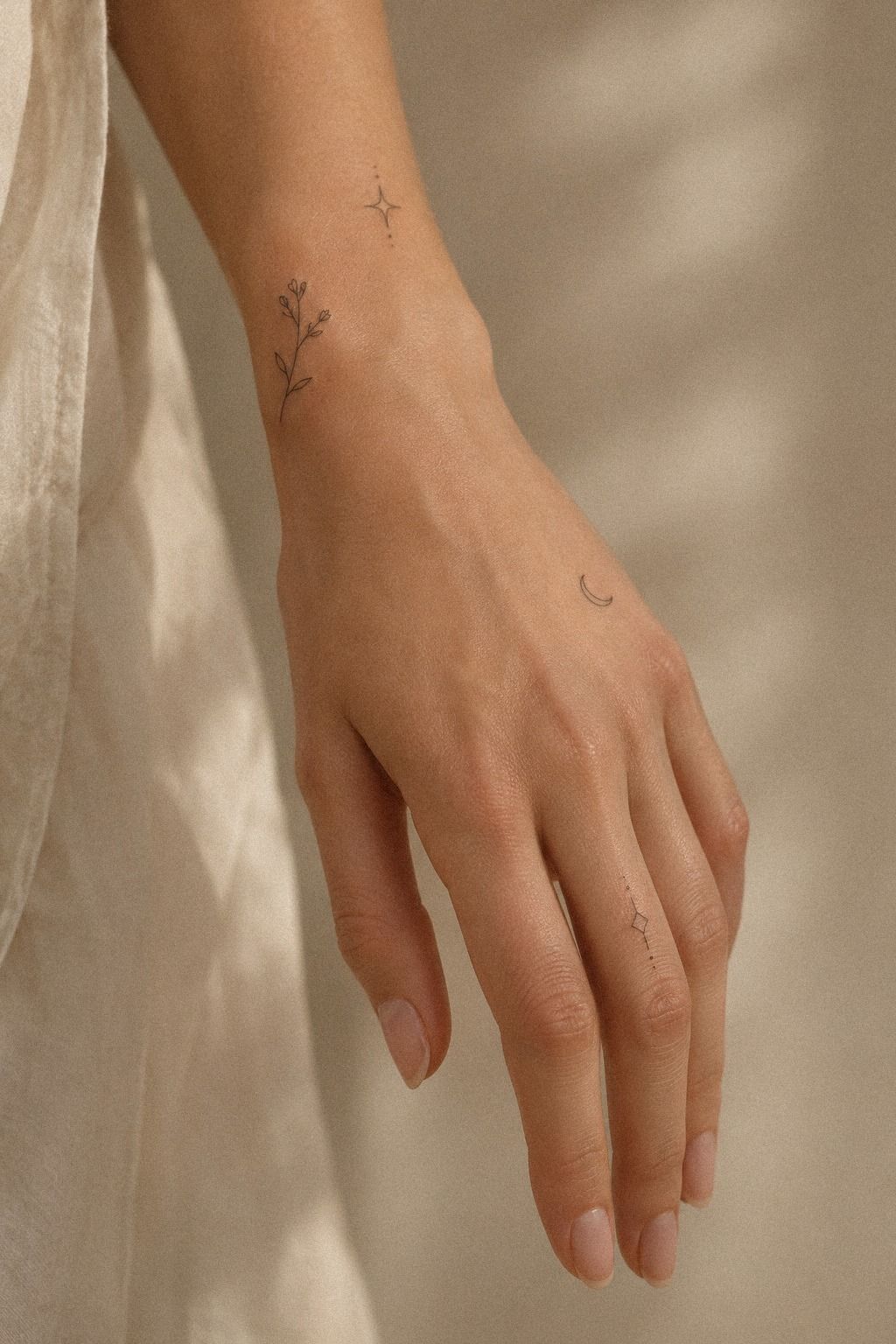
Palm tattoos demand a more careful conversation because the skin is thick, active, and difficult to keep still. You’ll need an artist who can explain how the placement behaves during healing.
A small mandala, protective symbol, or geometric sun can feel sacred when the pattern has enough open space. I’d avoid filling every section with tiny marks. Your palm needs a design that can survive movement and repeated contact.
Your artist may recommend a simpler version than the one you saved. That isn’t a failure. It’s often the difference between a readable tattoo and a crowded one.
Ask about healed palm examples, expected fading, and whether the artist offers a touch-up policy. These questions help you decide whether the cost is worth it. That matters!
You’ll also want to ask how long the appointment may take. A compact intricate palm design could be completed in one sitting, but the artist may work slowly because precision matters.
For related placement ideas, browse delicate geometric tattoos. A geometric palm design should feel intentional from every angle, not merely complicated.
7Keep Minimal Side-Hand Tattoos in an Elegant Single-Needle Style
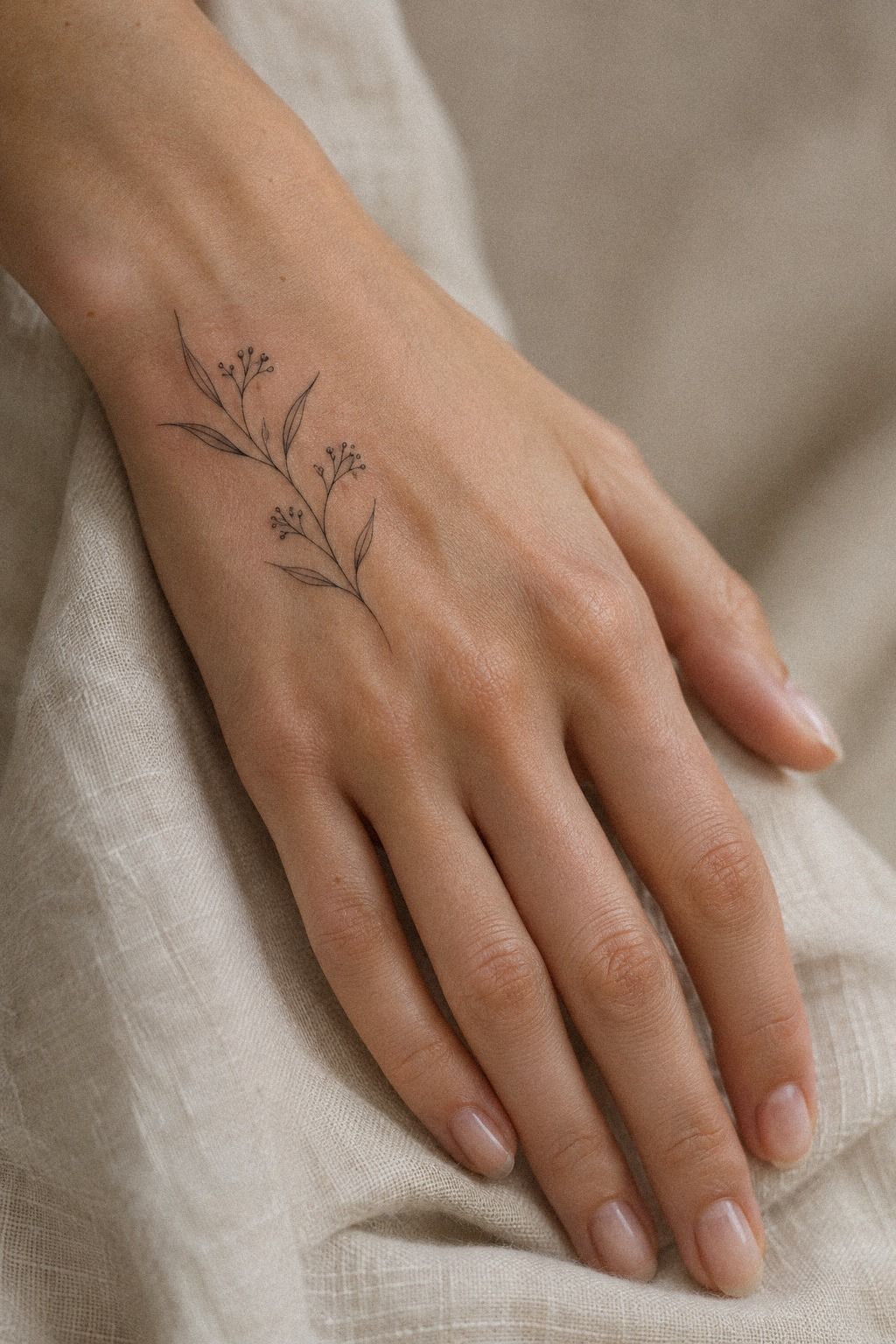
The side of the hand suits a narrow design that follows the edge instead of competing with your fingers. An elegant single-needle style can work well for a tiny word, stem, or symbolic mark.
8Pair Romantic Script with Flowing Vines

Flowing script can look romantic when the phrase is short enough to breathe. One word, a date, or a private phrase usually works better than a full sentence.
You’ll want to check the lettering at the actual size before the appointment. I’d print or stencil the phrase and inspect it from a natural arm’s length.
Vines can soften script, but too many curls may reduce legibility. Your artist should balance the flowing vines with enough clear space around each letter.
Ask whether the lettering will need a slightly stronger line than the surrounding vine. That adjustment can protect the word without making it look heavy.
If you’re unsure about visibility, compare delicate finger tattoo ideas with small side-hand placements. I’d choose the version I could still read years later, even if the trend changed.
The cost is usually easier to judge when you know exactly how many letters you want. A shorter design may offer better value because the artist can focus on spacing and consistency.
9Sharpen an Edgy Hand Tattoo with Micro Symbols

Micro symbols give you a way to make delicate work feel fierce. A tiny arrowhead, thorn, keyhole, or angular star can stay small while carrying a strong attitude.
The sharp geometry depends on clean structure. I’d avoid symbols with five tiny interior sections because they’ll compete for the same limited space.
One clear shape, such as a black arrowhead, will usually read better than a complicated emblem. You’ll want to check whether the design still looks balanced when your fingers move.
A touch of gritty texture can come from stippling or a slightly rough edge, but it shouldn’t look accidental. Ask to see the stencil from several angles, then flex your hand.
You can compare unique delicate hand tattoos for women and small hand tattoo ideas. If you want an edgy result, let the symbol carry the attitude rather than adding heavy shading everywhere.
This can be a good budget choice because one compact symbol doesn’t require a long appointment. The value still depends on precision, hygiene, and the artist’s healed portfolio.
10Colorful or Monochrome? Choose Playful Miniatures Carefully

A vibrant miniature changes once pigment reaches the skin.
Color can make a tiny flower, fruit, animal, or charm feel more playful, but every extra shade adds another decision about spacing and healing. Ask your artist which colors remain clear at the intended scale.
11Choose Timeless Botanical Engraving with Vintage Texture

Vintage botanical engraving gives you texture without needing a large tattoo. You can choose a fern, seed pod, moth wing, or antique flower with carefully controlled shading.
The vintage engraving style works best when the artist simplifies the reference. Too many engraved marks can become muddy on a small hand placement.
I’d choose one central botanical and let the outer edges stay open. That keeps the design elegant and gives the lines room to settle.
Ask whether the artist uses fine hatching, stippling, or solid shadow. You’ll want to know which technique appears strongest after healing.
A botanical engraving can be a personal choice if you connect it to a place, person, or season. I like designs that have a private reason without needing an explanation every time someone notices them.
For more references, browse small hand tattoos for women and delicate hand tattoo ideas. A classic motif can be worth the cost because it doesn’t depend entirely on a short-lived trend.
The Fine-Line Rule I Trust on Hands
I used to think the smallest tattoo would be the easiest tattoo. That isn’t always true. A tiny mark can demand more precision because every millimeter carries meaning, and hand skin doesn’t offer much room for correction.
The one-symbol rule has saved me more than once: choose the central idea first, then remove anything that doesn’t support it. You’ll usually get a cleaner result and a more predictable appointment.
Your artist’s healed portfolio matters more than a large social following. Fresh ink is bright and persuasive, but healed examples reveal whether lines spread, whether color stays even, and whether the design still reads.
I’d rather book someone with twelve excellent healed hand tattoos than someone with hundreds of polished examples. That’s where the real value is.
Pain is personal, and hands can be sensitive because bone and thin skin sit close together. Still, your session may be manageable when the design is small and the artist works efficiently.
You’ll want to eat beforehand, bring water, and keep your appointment free from rushing. A calm client usually makes the process easier for everyone!
Aftercare is part of the design decision. Wash gently, moisturize as directed, avoid soaking the tattoo in a pool, and protect it from strong sun after healing.
Surface healing often takes about 2 to 3 weeks, while complete settling can take about 2 to 3 months. That difference is easy to forget, but it affects how you judge the final result.
Here’s the practical US reference I’d keep nearby:
The price varies by artist and region, so you shouldn’t treat the table as a quote. Your design’s size, placement, color, and artist’s experience will shape the final number.
If you’re choosing between two ideas, pick the one you’ll still explain proudly when the trend has moved on. That’s usually the more empowering choice.
Before You Choose a Hand Tattoo, Name the Feeling
Start with the personal feeling you want the design to carry. Do you want something bold, private, personal, or easy to recognize from a distance?
You’ll make a better decision when you separate the symbol from the placement. I’d choose the motif first, then test it on the side hand, finger, wrist edge, or upper hand.
A design can be dainty without being invisible. Your artist can adjust scale, spacing, and line weight so the tattoo remains readable.
If you want a wider comparison, look through minimalist hand tattoo ideas and small hand tattoo references. Save only the examples that genuinely match your taste.
Placement Changes the Read
The back of the hand gives a design more visibility, while the side hand can feel discreet. Fingers create a smaller canvas, and the wrist edge gives you more length.
You’ll want to consider your work, clothing, jewelry, and daily habits. I’d also ask myself whether I’m comfortable seeing the tattoo constantly or whether I prefer a placement I can turn away.
A sleek design may look completely different when it crosses a joint. Your artist should check the movement before applying the final stencil.
The right placement can make an ordinary symbol feel iconic. The wrong placement can make a beautiful design feel cramped, so take your time.
What Line Weight Does
Line weight controls how a tattoo reads now and how it may settle later. Very fine marks can feel delicate, but they need enough separation to remain distinct.
You’ll want to ask whether the artist recommends a single pass, slightly stronger outlines, or selective shading. I’d rather have one clear line than several marks competing for attention.
Line weight also affects the cost because precise work can take longer. Ask what’s included in the quoted price before you book.
A minimal tattoo isn’t automatically easier. Sometimes the simplest design gives the artist nowhere to hide, so choose someone whose healed work proves they can handle restraint.
Is One Sitting Really Enough?
For many compact designs, one sitting may be enough, especially when the composition is simple. You’ll need to confirm the expected time with your artist because placement and color change the appointment.
A single-session plan can be valuable when you’re coordinating work, travel, or other commitments. I’d still leave space in my schedule afterward so I’m not rushing through early aftercare.
Some tattoos need a later touch-up once they’ve settled. That doesn’t necessarily mean the first session failed. Hand skin receives friction, and results can vary.
Ask whether the shop’s touch-up policy is included. Knowing the policy helps you compare total cost, not just the initial price. Worth it!
Budget, Value, and Artist Fit
A low quote may look attractive, but your decision should include hygiene, healed results, placement skill, and communication. You’re buying an experience and a permanent result, not only minutes under a needle.
The best value often comes from an artist whose portfolio matches your design. I’d compare at least three healed examples before I choose.
You can also ask whether the design fee includes stencil changes and touch-up work. A clear quote makes budgeting easier and prevents awkward surprises.
If you’re comparing artists, browse delicate finger tattoo references and small wrist tattoo ideas. Then judge the artist’s actual work, not the popularity of the reference.
Aftercare That Protects Fine Lines
Follow the instructions your artist gives you, since products and bandage choices can differ. You’ll usually need to keep the area clean, avoid soaking it, and apply only the recommended moisturizer.
Don’t pick flakes or scratch the skin while it settles. I know it’s tempting, especially when the tattoo looks dull or uneven, but patient healing protects the result.
Strong sun can affect delicate lines and color. Once the skin has healed, use suitable sun protection when your hands are exposed.
Contact your artist if you’re concerned about unusual irritation, spreading redness, or healing that doesn’t seem right. A quick healing check is better than guessing.
What People Always Want to Know
How much does a delicate hand tattoo for women usually cost?
A delicate hand tattoo usually costs about $100 to $300 in the US, depending on the artist, region, size, and placement. Some shops start around $50 to $100, while experienced artists may charge about $100 to $250 per hour.
Your best comparison is the artist’s healed portfolio, not the lowest number. Clear pricing helps you plan, and you shouldn’t choose an artist only because they’re cheap.
Are delicate hand tattoos a good idea for a first tattoo?
Yes, a small hand tattoo can suit a first session if you understand the visibility, sensitivity, and possible fading. Choose a simple symbol with clear linework, then follow aftercare carefully.
A forearm may feel more forgiving, but your hand can still be right for you. Personal meaning matters more than copying someone else’s placement.
How do I choose a tattoo artist for delicate hand tattoos?
Look for healed examples showing clean lines, consistent spacing, and designs similar to yours. Ask about hand tattoo experience, hygiene, stencil placement, and aftercare.
You can compare artists through delicate hand tattoo references, but book from the artist’s own work. Your comfort matters, too.
How much do delicate hand tattoos hurt?
Hands can feel more intense than the forearm because the skin is thinner and closer to bone. Ribs, feet, hands, and sternum are often more sensitive, while the forearm, thigh, and shoulder tend to feel more tolerable.
I’d eat, hydrate, and avoid rushing before the appointment. Tell your artist if you need a pause.
How long does a delicate hand tattoo take to heal?
The surface often heals in about 2 to 3 weeks, while complete healing and settling can take about 2 to 3 months. Wash gently, moisturize as directed, and avoid pools and strong sun during early healing.
Your tattoo may look dull or uneven while it settles. Don’t judge it too soon, and contact your artist if you’re worried.
What’s the best placement for a delicate hand tattoo?
The side hand, upper hand, finger, and wrist edge can all work, depending on visibility and daily friction. A side-hand placement feels discreet, while the back of the hand reads more clearly.
Hands and fingers may fade or spread faster than protected areas. Ask about healed placement examples before choosing.
Where I’d Start First
If I had to pick one, I’d start with the small fine-line wildflower sprig. It has enough shape to stay readable, enough negative space to age gracefully, and it won’t depend on a trend.
You could also start with a moon phase, a single botanical symbol, or one sharp micro icon. The right choice is the one that still feels timeless when you stop comparing it with everyone else’s work.
Pin the idea for later, then bring one clear reference to your artist instead of twenty competing ones. Start there!