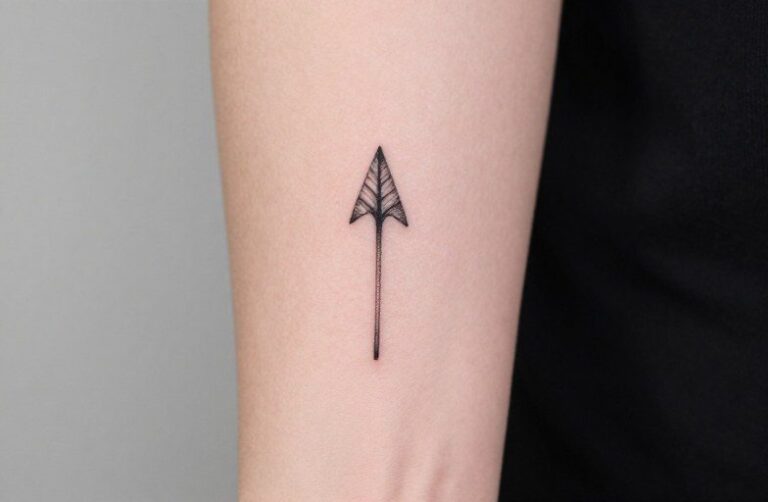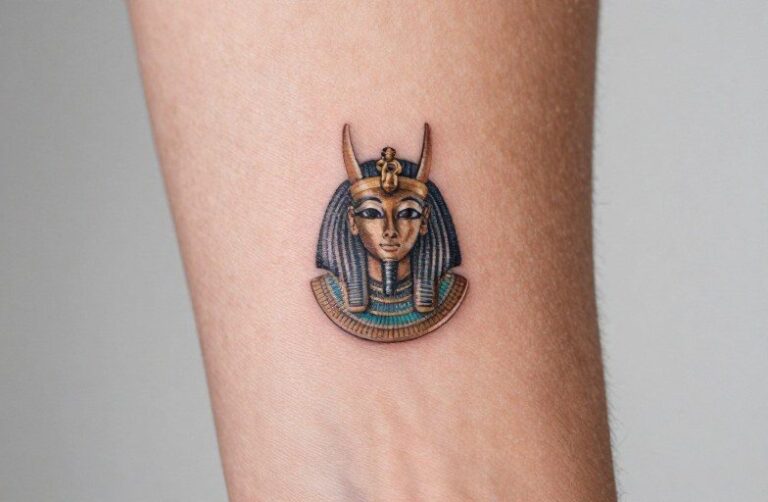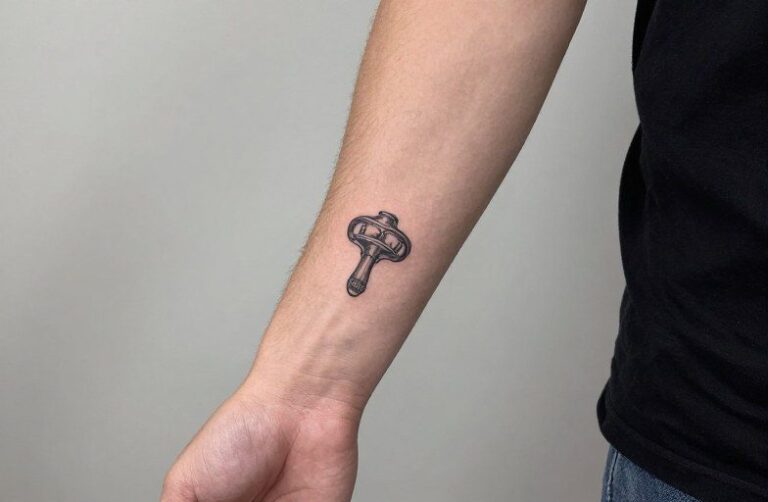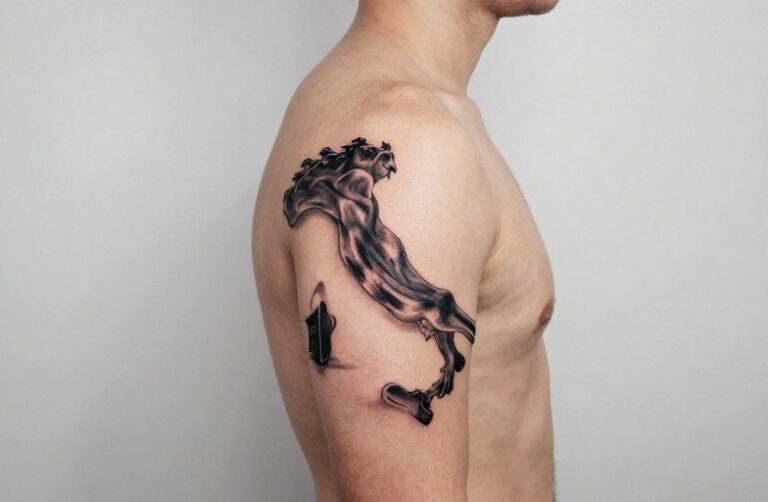
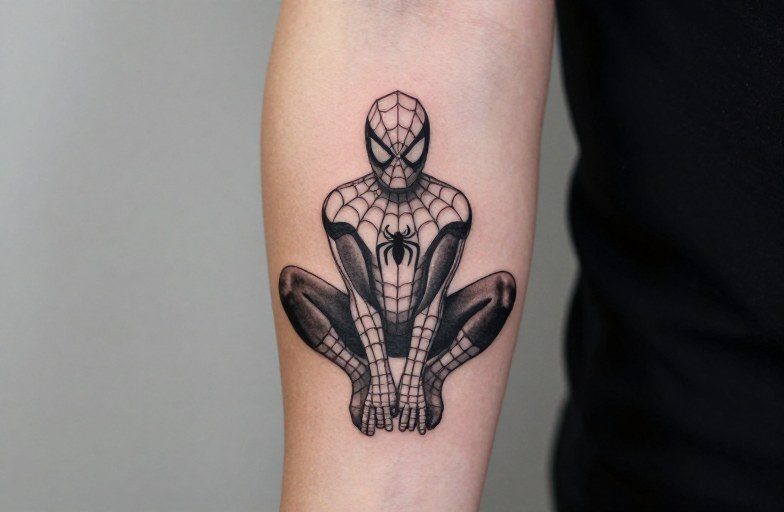
Spider-Man’s visual language compresses surprisingly well. The web pattern, the mask silhouette, the spider emblem, all of them read instantly even at postage-stamp size. That’s the real appeal of a minimalist take: you get the recognition without the noise. This guide breaks down how to pull it off, from line weight to placement to how that red ink is going to behave five years out.
Tips for Choosing
Start with what you actually want visible. The full mask with webbing demands more space than a single spider emblem or a web-shooter outline. Consider your daily life: hand tattoos, neck tattoos, anything below the short-sleeve line, Spider-Man or not, carry social and professional weight you can’t ignore. Be honest about that before committing to placement.
Reference the Source Material, Not the Merch
Movie posters and t-shirt graphics tend toward busy detail that doesn’t translate to skin. Go back to Steve Ditko’s original 1960s panels: thick black outlines, limited crosshatching, shapes that hold up at small scale. The McFarlane era added spaghetti-web complexity that blurs together below three inches. Older comic art often makes better tattoo reference than newer material.
Think About the Negative Space
Minimalist Spider-Man work lives or dies by what’s left out. A mask outline with no interior webbing reads faster than one crammed with detail. The web pattern itself, isolated as a background element, can frame another tattoo or stand alone on a wrist or ankle. Negative space isn’t emptiness, it’s the design breathing.
- Single continuous line drawings work best at 2+ inches; below that, lines collapse together
- Isolated spider emblems suit fingers, behind the ear, or collarbone placement
- Web patterns as background filler need contrast with surrounding ink or bare skin
- Mask silhouettes without interior detail age cleaner than fully rendered versions
Color Choices
Red is the problem child here. Spider-Man’s classic scarlet fades faster than almost any hue in the palette, shifting toward pink or salmon within a few years of sun exposure. Blue holds better. Black holds best. This isn’t opinion, it’s how iron oxide and organic red pigments break down under UV and immune response.
The Case for Blackwork
A solid black mask silhouette, maybe with a single red accent in the eye or chest spider, gives you the character reference without the maintenance headache. Blackwork also ages into a softer grey that still reads as intentional; faded red often reads as a mistake. If you must have color, plan for touch-ups every 3-5 years, or choose placement that sees minimal sun.
Strategic Color Placement
Some collectors split the difference: black outline and webbing with limited red fill in the eyes or spider emblem only. This concentrates the high-maintenance pigment where it has maximum impact. Another approach uses the natural skin tone as the “white” of the eyes, letting the negative space do the work that white ink would attempt (and likely fail at, long-term).
Size & Scale
Small doesn’t mean simple. At under two inches, web lines merge into grey smudges and the spider emblem becomes an unidentifiable blob. The absolute floor for a recognizable mask is about 1.5 inches wide; the chest spider emblem needs similar breathing room. Fingers, despite their popularity, are genuinely punishing for detailed work, constant movement, frequent washing, thin skin over bone.
Where Detail Actually Survives
Outer forearm, calf, and upper chest offer the best combination of flat skin, moderate sun exposure, and enough real estate for the design to read. Ribs and inner bicep work too, though the stretch and compression in those areas will distort web geometry over time. The top of the foot, despite looking flat, shears constantly and eats fine lines for breakfast.
Popular Styles
Minimalist Spider-Man tattoos cluster around a few approaches that have proven themselves in actual skin, not just on Instagram.
Single-Line and Continuous Line
One unbroken line forming the mask outline, eyes, and maybe a hint of webbing. Requires a steady hand and a specialist in this specific technique, not every artist who can do it should. The best examples have variation in line weight: thicker where the jaw meets the neck, hair-thin at web intersections. Done poorly, it looks like a child drew it. Done well, it’s elegant and immediately readable.
Geometric and Abstracted
Breaking the mask into angular planes, or rendering the spider emblem as a series of triangles and negative space. This style borrows from the broader geometric tattoo trend but keeps the character reference intact. Suits collectors who want the nod without the literalism. Often works well as a companion piece to other geometric work.
Comic Panel Fragments
Isolating a single panel element, an eye, a web-shooter, a fragment of web line with a speech bubble corner. This reads as minimalist because of the crop, not the rendering. The original detail level stays high, but the frame limits it. Requires a tattooer comfortable with comic-specific line quality, which is a narrower skill set than general illustrative work.
Standout Design Ideas
Moving past the obvious mask-on-forearm approach, some directions that actually hold up:
- Web-shooter outline: The mechanical wrist device, rendered as a small rectangular object with button detail. Recognizable to fans, abstract enough to pass as generic tech to others. Sits well on the inner wrist or forearm.
- Spider emblem only: The chest symbol, isolated. Works at very small scale because it’s a compact shape with internal contrast. Behind the ear, on the ankle bone, or as a finger piece (though fingers remain problematic).
- Web pattern as background: Not framing Spider-Man, but framing something personal, a date, a name, another small image. The web becomes architectural rather than representational.
- Half-mask with mirror symmetry: The mask split vertically, showing only one eye and half the web pattern. Relies on the viewer’s brain completing the image. Demands precise execution; asymmetry here looks accidental, not artistic.
- Ditko-era eyes: The distinctive teardrop-shaped 1960s eye design, oversized and isolated. More stylized than modern movie versions, more graphic, more tattoo-appropriate.
For First-Timers
Spider-Man’s a common first tattoo for a reason: the emotional connection is already there, the imagery is familiar, and the minimalist approach keeps the commitment manageable. But first-timers make predictable mistakes.
Don’t Let Nostalgia Drive Placement
The spot that “feels right” emotionally, over the heart, exactly where the chest emblem sits, might be a nightmare to heal (stretched skin, constant movement from breathing) or to show when you want to. Separate the symbolic placement from the practical one. A good artist will help you find overlap, but you need to come in open to compromise.
Healing Reality for Fine Lines
Minimalist work, especially single-line or very fine detail, looks crisp at week two and settles by month three. That settling involves some line spread, some softening of edges. The gap between fresh and healed is wider with fine work than with bold traditional pieces. Expect it, don’t panic at the three-month mark, and wait a full year before judging whether touch-ups are needed.
Red ink, as mentioned, needs extra protection during healing and long-term. Keep it out of sun entirely for the first month, then SPF 30+ forever. The commitment to the color is a commitment to the maintenance.
Final Word
A minimalist Spider-Man tattoo succeeds when it’s confident about what it leaves out. The character has sixty years of visual history to draw from; you don’t need to cram it all in. Pick the element that resonates, the mask shape, the web pattern, the spider emblem, and let it breathe. The best work in this style looks inevitable, like the design was always meant to exist at that scale, in that spot, with exactly that much detail and no more. Find an artist whose healed work you can examine in person, trust their judgment on minimum size for your chosen element, and plan for the long game with color. The tattoo will outlast the movie franchise, the comic run, maybe even your own attachment to the character. Make sure it holds up as pure design, regardless.
Frequently Asked Questions
How small can a minimalist Spider-Man mask tattoo be and still look good?
About 1.5 inches wide is the practical floor. Below that, web lines merge and the eye shapes lose definition. Single-line versions need even more room to show the artist’s line weight variation.
Does red ink really fade faster than other colors in Spider-Man tattoos?
Yes, organic red pigments break down quicker under UV exposure and immune response. Plan for touch-ups every 3-5 years if you use significant red, or concentrate it in small accent areas only.
Are single-line Spider-Man tattoos more expensive than traditional styles?
Often yes, because the technique requires specific expertise and zero room for error. One wobble ruins the entire concept. You’re paying for precision and the artist’s specialized practice in that style.
What’s the best placement for a minimalist Spider-Man tattoo that needs to stay hidden for work?
Upper outer arm, covered by a short sleeve; upper thigh; or ribs under a standard t-shirt. Avoid hands, neck, and lower forearm unless your workplace is genuinely accepting of visible ink.