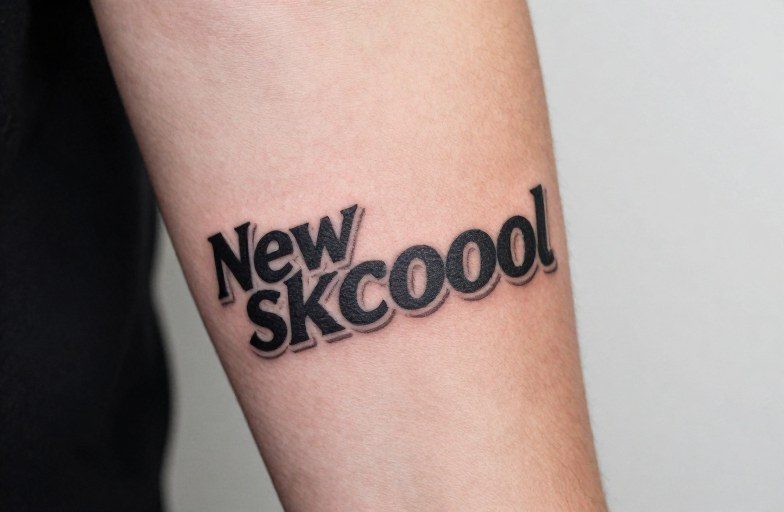
New skool tattoos took the bold outlines of traditional Americana and mixed them with graffiti, Saturday morning cartoons, and West Coast street culture. What emerged is a style defined by exaggerated proportions, saturated color palettes, and subject matter that refuses to take itself seriously. Think bulging eyes on animals, dripping slime borders, starbursts behind characters, and lettering that looks pulled from a comic book panel. If you are considering this style, the key question is not whether you can handle the visual noise, but whether your design choices will hold their punch as the years pass.
Standout Design Ideas
Character-Driven Subjects
The heart of new skool is recognizable figures rendered with deliberate distortion. Classic choices include reimagined cartoon characters with street accessories, animals wearing human expressions, or anthropomorphic objects: smiling grenades with eyes, cash stacks with arms and legs. The style demands that ordinary subjects become personalities. A new skool tiger is not just a tiger; it is a tiger with bared gold teeth, a bandana around its neck, and claws extended in exaggerated arcs. The distortion is intentional, not accidental.
Popular subjects that translate well:
- Graffiti-style lettering with 3D drop shadows and bubble fills
- Clown girls with tear drops, exaggerated lips, and saturated hair
- Food items with faces: burgers, tacos, or ramen bowls with arms and attitudes
- Reaper or skull motifs with cartoon proportions, often wearing headphones or holding spray cans
- Pin-up inspired figures with impossible curves and patterned backgrounds
Background and Fill Techniques
Unlike traditional tattooing where negative space breathes, new skool often crowds the frame. Starbursts, cloud shapes, checkerboard patterns, and slime drips compete for attention around the central figure. These fills are not afterthoughts; they are structural. A poorly planned background makes a crowded design muddy; a deliberate one creates depth through color separation. The best backgrounds use contrasting temperatures: cool purples and blues behind warm orange and yellow subjects, or vice versa.
Matching and Pairing Ideas
Style Combinations
New skool pairs naturally with adjacent styles that share its graphic DNA. Graffiti lettering sits comfortably alongside a new skool character because both rely on bold outlines and flat color fields. Some collectors bridge new skool and neo-traditional, keeping the exaggerated proportions but adding neo-trad’s more restrained color palette and ornamental details. Others run new skool on one limb and straight graffiti pieces on the other, creating a cohesive street-art narrative across the body.
Matching Work for Couples or Friends
For couples or friends seeking matching tattoos, the style offers built-in playfulness. Matching cartoon characters with mirrored expressions, complementary food items (one burger, one fries), or split graffiti pieces that form a whole when stood together all work without the sentimental weight that matching tattoos sometimes carry. The inherent humor of the style makes pairing feel intentional rather than obligatory.
How to Personalize It
Integrating Personal Symbols
The cartoon vocabulary of new skool does not preclude personal meaning. Your dog becomes a new skool portrait with exaggerated jowls and a gold chain. Your hometown sports team gets reimagined with a mascot character throwing hand signs. The trick is finding an artist who can translate your reference into the visual grammar of the style: bulging elements, thick black outlines separating every color field, and that specific saturated palette that reads as new skool rather than generic cartoon.
Color Choices That Age
Personalization often means color selection, and here the style presents a genuine challenge. New skool relies on high-saturation pigments: hot pinks, electric purples, lime greens, all of which fade differently than earth tones. Yellows and light greens tend to soften and muddy within five to seven years. Deep blues and reds hold longer. A personalized piece that leans too heavily on ephemeral colors may lose its readability faster than one that balances brights with anchors of black, navy, or burgundy. Discuss this explicitly with your artist: which colors in their palette have proven stable in their healed work?
Size and Placement
Minimum Effective Scale
New skool demands space. The thick outlines and color separation that define the style do not shrink gracefully. At small scales, lines blur together and the exaggerated features that make the style distinctive become indistinguishable mush. Minimum effective size varies by complexity, but simple designs rarely work well below four inches in their longest dimension. Complex pieces with multiple characters or detailed backgrounds need significantly more real estate.
Where It Sits Best
Placement affects perceived scale. A forearm piece reads larger than the same design on a thigh because of viewing distance and surrounding context. Upper arms and outer thighs offer the flat planes that let new skool compositions sit cleanly. Ribs, inner biceps, and areas with significant curvature or movement distort the graphic flatness that makes the style work. If you are set on a smaller piece, consider a single bold letter or simplified character rather than a scene.
Contemporary Variations
Neo-New Skool Hybrids
Some contemporary artists are pushing the style toward finer detail and more nuanced shading while keeping the exaggerated proportions and pop culture references. These hybrids often incorporate single-needle line work for interior details: fine fur texture, subtle facial expressions, while maintaining the thick outer boundaries that identify the piece as new skool. The result reads as more technically refined without abandoning the style’s essential cartoon DNA.
Black and Grey Interpretations
Traditionally color-dependent, new skool is seeing experimentation in black and grey. Artists achieve the necessary separation through stippling, whip shading, and strategic negative space rather than color fields. The effect is moodier, closer to graphic novel illustration than Saturday morning cartoon. This variation suits collectors drawn to the style’s graphic boldness but restricted by professional dress codes or personal preference for monochrome palettes.
Regional Schools
West Coast and East Coast
The regional schools of new skool remain distinct. West Coast work, particularly from Southern California, often incorporates Chicano art influences: fine-line black and grey elements within otherwise color-saturated pieces, script lettering with specific regional flourishes, and subject matter rooted in lowrider and street culture. East Coast interpretations, especially from the tri-state area, tend toward harder edges, more aggressive graffiti integration, and color palettes that favor primaries over pastels.
European and Japanese Adaptations
European new skool, particularly from the UK and Germany, has developed its own vocabulary: more abstracted figures, frequent use of dot work patterns within fills, and subject matter that pulls from European comic traditions rather than American animation. Japanese artists have adapted the style with manga-influenced proportions and specific color combinations that read as distinctly Japanese new skool to informed eyes. Finding an artist whose regional lineage matches your aesthetic preference matters more in this style than in more universal traditions.
What to Remember
New skool tattoos age through a specific trajectory. The bold outlines that define the style hold their integrity longer than the color fields they contain, meaning a well-outlined piece remains readable even as interior colors soften. The black borders function as structural scaffolding. Without them, the style collapses into indistinct blur. Ensure your artist builds with this in mind, not just packing color but establishing clear hierarchy between elements.
Healing demands the same care as any tattoo, but the color saturation means you will see significant change between fresh and healed states. Brights settle noticeably duller. That electric pink becomes a softer magenta. Plan your expectations around the healed result, not the fresh photo. The best new skool work is designed for the long view: composition that works when colors have muted, outlines that carry the design even if specific hues fade unevenly. The style’s exuberance is its appeal; its lasting power depends on whether the underlying structure is sound enough to carry that energy for decades.
Frequently Asked Questions
How is new skool different from traditional old school tattoos?
New skool keeps the bold outlines of traditional work but adds exaggerated proportions, graffiti influences, and saturated color palettes. Old school relies on limited colors, simpler shading, and iconic imagery like anchors and swallows. New skool distorts reality deliberately: bulging eyes, impossible anatomy, and pop culture references replace the restrained symbolism of traditional Americana.
Do new skool tattoos fade faster than other styles?
The light, saturated colors common in new skool, yellows, light greens, hot pinks, tend to fade faster than the earth tones and deep blues used in traditional work. However, the thick black outlines that define the style act as structural scaffolding. A well-outlined piece remains readable even as interior colors soften. The key is balancing brights with stable anchor colors and strong black boundaries.
Can new skool work in black and grey?
Yes, though it is less common. Artists achieve separation through stippling, whip shading, and strategic negative space rather than color fields. The effect reads as moodier and closer to graphic novel illustration. This suits collectors who want the style’s graphic boldness but need monochrome for professional or personal reasons.
What size should a new skool tattoo be?
New skool does not shrink well. The thick outlines and color separation need room to breathe. Simple designs rarely work below four inches in their longest dimension. Complex pieces with multiple characters or detailed backgrounds need significantly more space. Upper arms, outer thighs, and forearms offer the flat planes that let compositions sit cleanly.
How do I find an artist who specializes in new skool?
Look for portfolios with consistent bold outlines, exaggerated proportions, and flat color fields. Regional lineage matters: West Coast artists often blend Chicano influences, East Coast work tends toward harder graffiti edges, European artists pull from different comic traditions. Ask to see healed photos, not just fresh work, to judge how their colors hold over time.