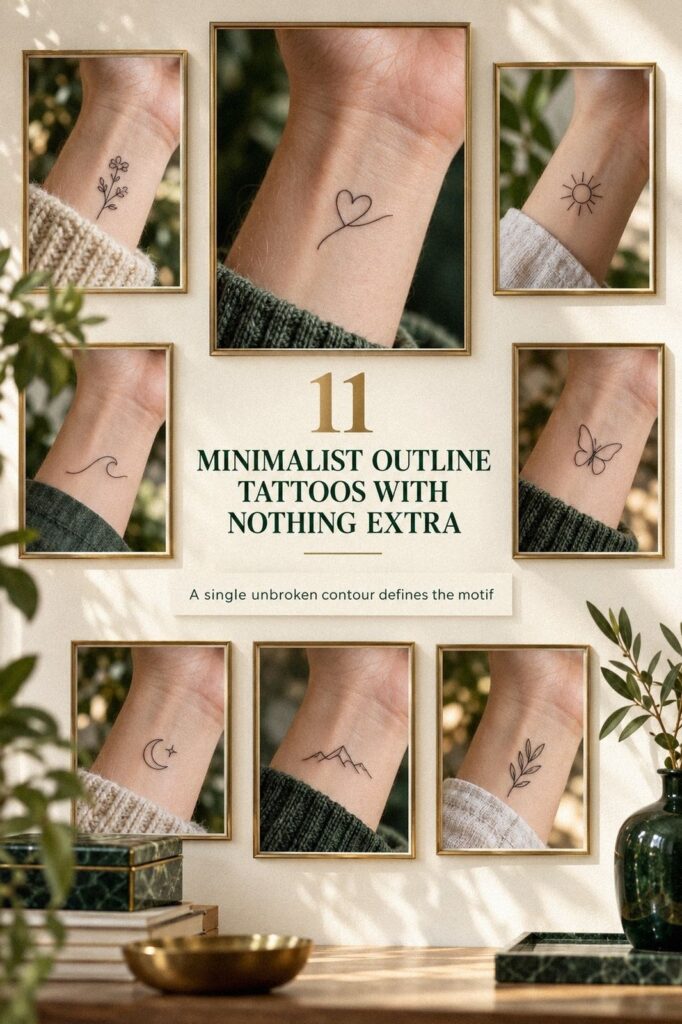
Minimalist outline tattoos can stay crisp, personal, and readable when you match the design to the placement. I learned that after choosing a line too fine for a high-friction spot. Now I look at movement, sun exposure, and meaning first. These 11 ideas keep the ink delicate without making it forgettable. Fine-line tattooing rewards restraint, but it still needs a clear plan.
My honest take? The strongest small tattoos aren’t trying to shout. They use one striking shape, one personal detail, and enough open skin to stay legible.
If you’re comparing ideas, start with minimalist small wrist tattoos and note what still looks readable at its actual size.
- Small Minimalist Outline Tattoos for Wrists
- Minimalist Outline Tattoos Inspired by Wildflowers
- Why Behind-the-Ear Outline Tattoos Work
- Minimalist Outline Tattoos Featuring Fine Faces
- What Makes Finger Tattoos Practical?
- Minimalist Outline Tattoos with Celestial Symbols
- Let the Collarbone Guide the Outline
- Minimalist Outline Tattoos Using Single-Line Animals
- Minimalist Outline Tattoos with Meaningful Initials
- Compare Ankle and Foot Placements
- Minimalist Outline Tattoos with Delicate Geometric Shapes
1Small Minimalist Outline Tattoos for Wrists
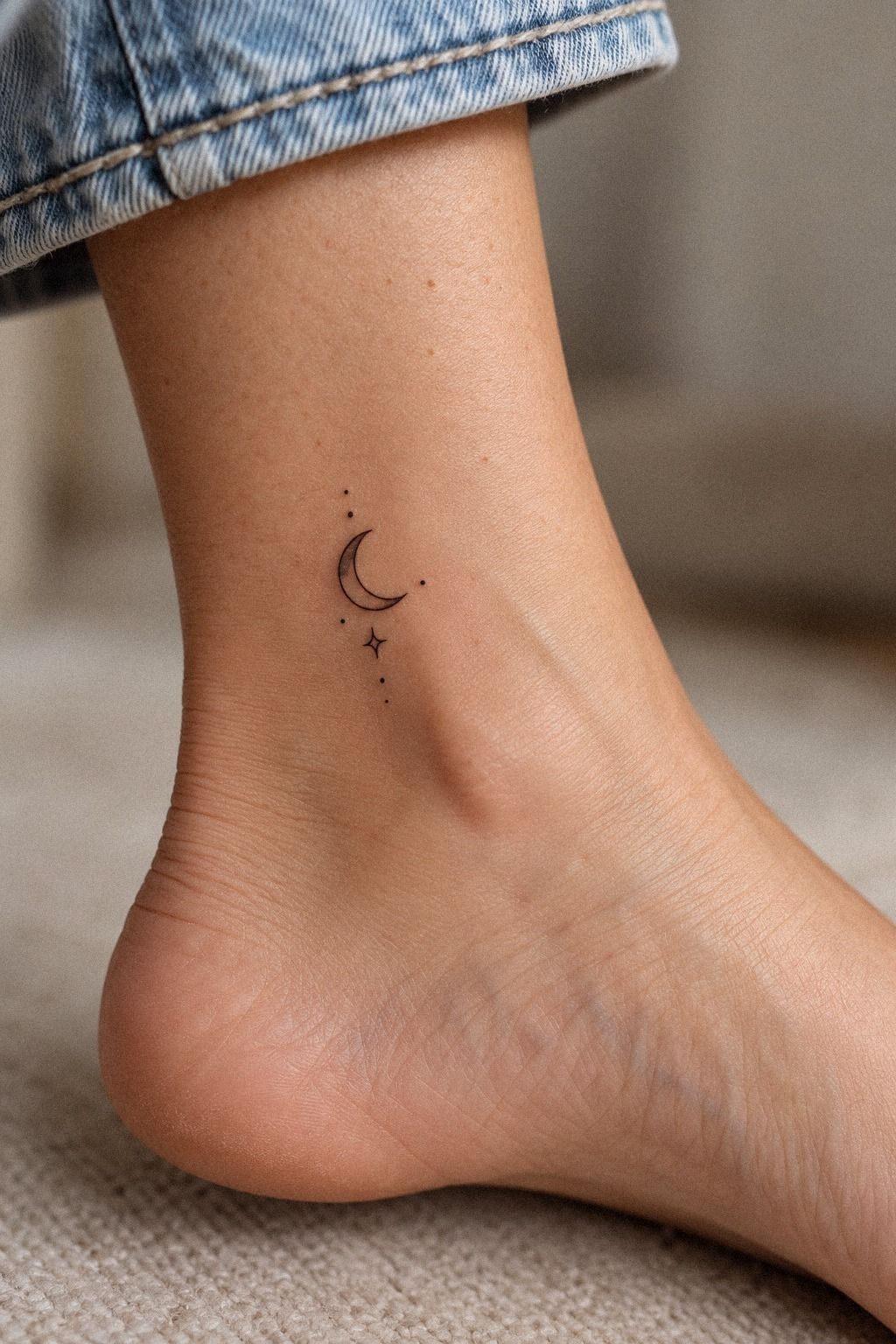
A wrist piece works best when you keep the shape compact and the outline deliberate. Think of a tiny crescent, open heart, sprig, or initial that still reads from a few feet away. Fine-line tattooing can look graceful here, but an overly intricate design may blur into visual noise as your skin moves.
I’d choose a symbol with one clear gesture rather than five tiny details. A small botanical stem, crisp star, or personal letter can feel meaningful without announcing itself. You can compare minimalist hand wrist tattoos before you settle on your final sketch.
The inside wrist is easier to show and monitor during healing. The outer wrist gets more sunlight and friction from sleeves. You’ll also want to consider your watch, bracelets, and daily habits.
Black tattoo ink may stay more visible than pale gray ink, while a muted terracotta or olive accent can add color without overwhelming the outline.
I made the mistake of treating size as the whole decision. It isn’t.
Your placement has to support the design, or that dainty mark can become faint before it becomes part of you. Keep the shape understated, personal, and clear!
A wrist tattoo also needs a practical aftercare plan. You’ll wash your hands often, bend your wrist constantly, and may brush the area against clothing.
Ask your artist how the placement affects healing before you book. Wrist aftercare can make a noticeable difference while the outline settles.
2Minimalist Outline Tattoos Inspired by Wildflowers
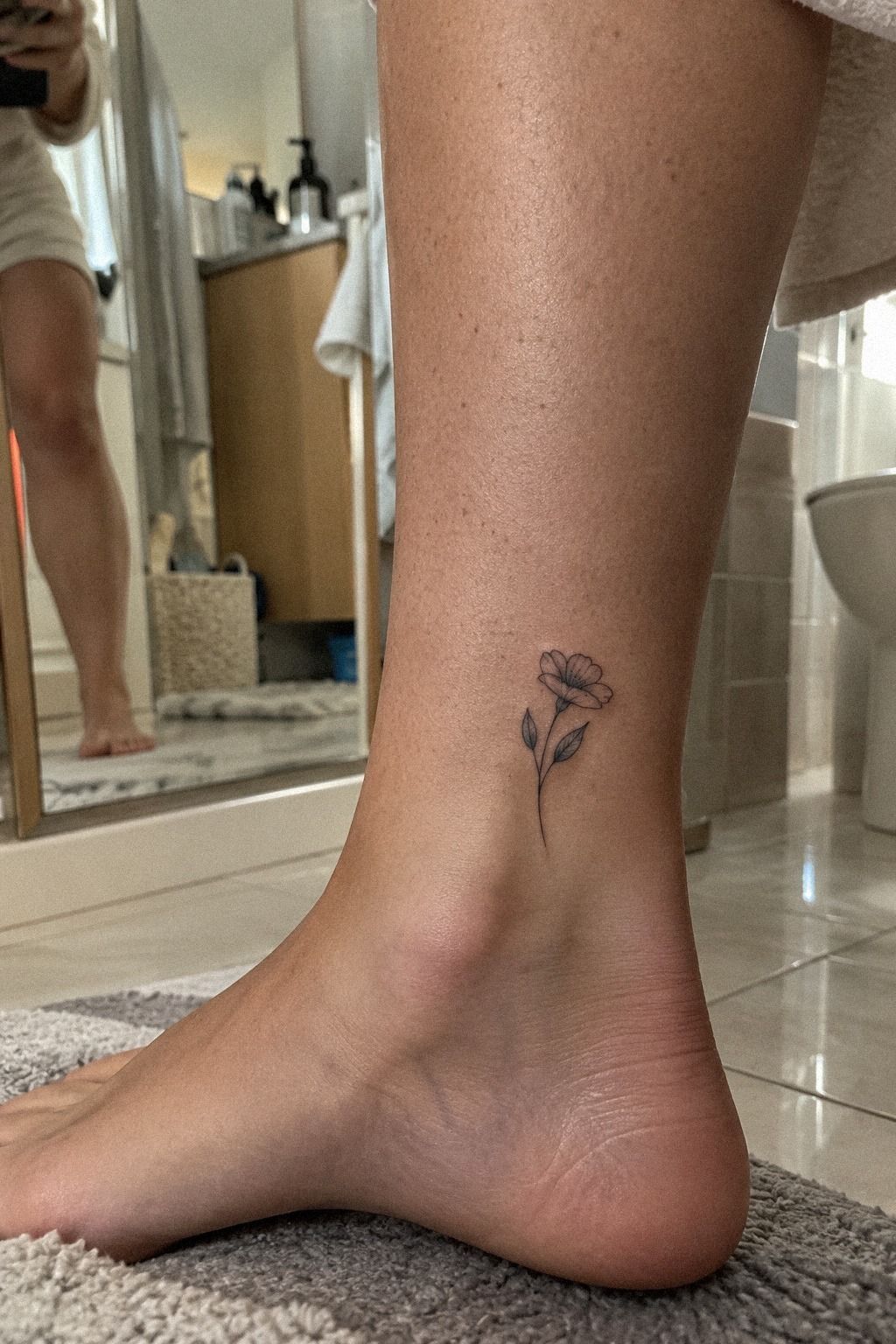
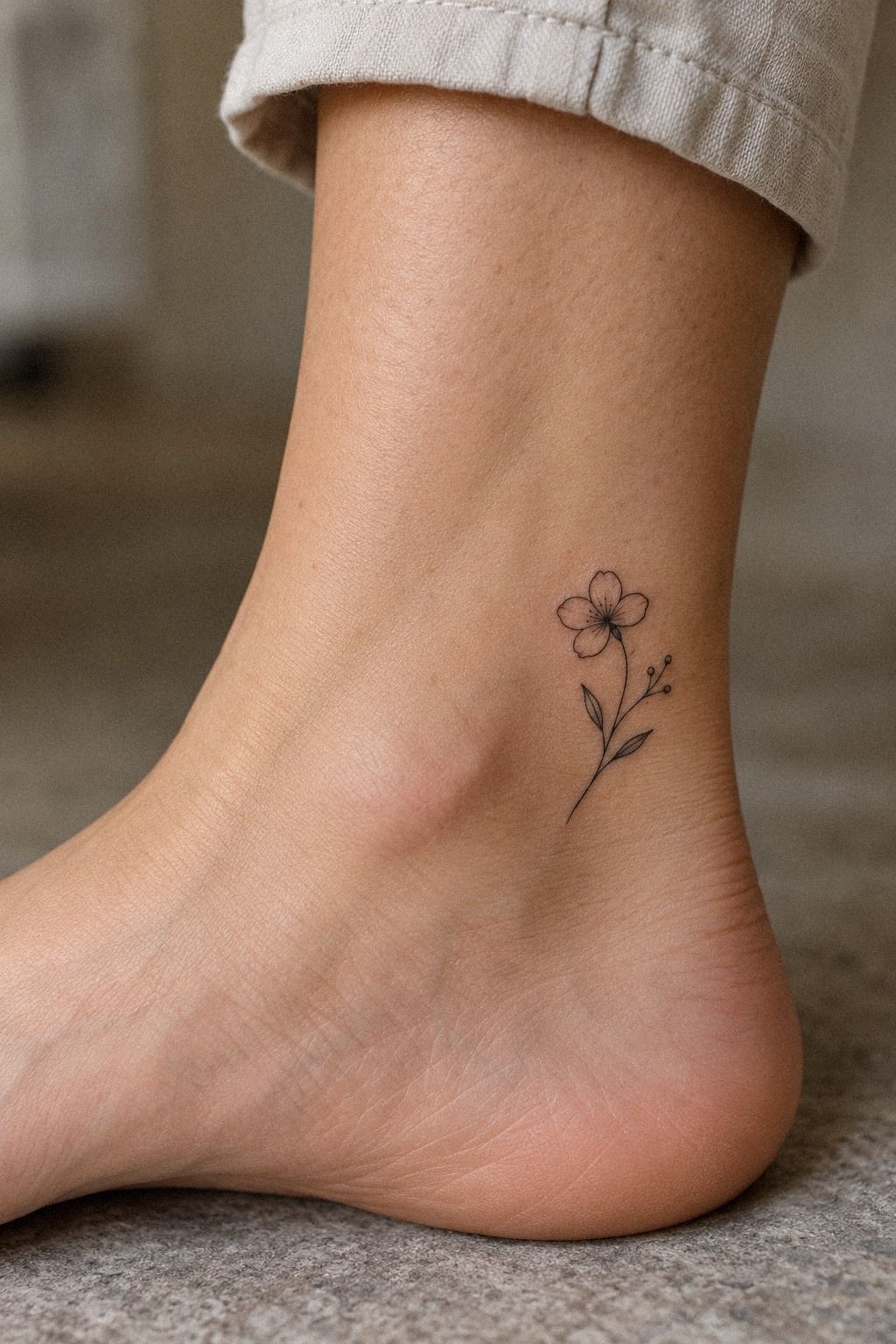
Wildflower outlines carry a romantic feeling without requiring a large bouquet. A single stem with two leaves, a loose poppy, or a tiny daisy can look flowing and expressive on the ankle. Black tattoo pigment gives the stem enough contrast to remain readable against medium or warm skin tones, while a clay-brown accent can echo the flower without relying on fragile pale ink.
You’ll get the strongest result when the flower has a recognizable silhouette. I’d skip a crowded meadow design at miniature scale because the petals can merge during healing. One bold curve and a few crisp leaves often feel more timeless than a dozen fragile marks.
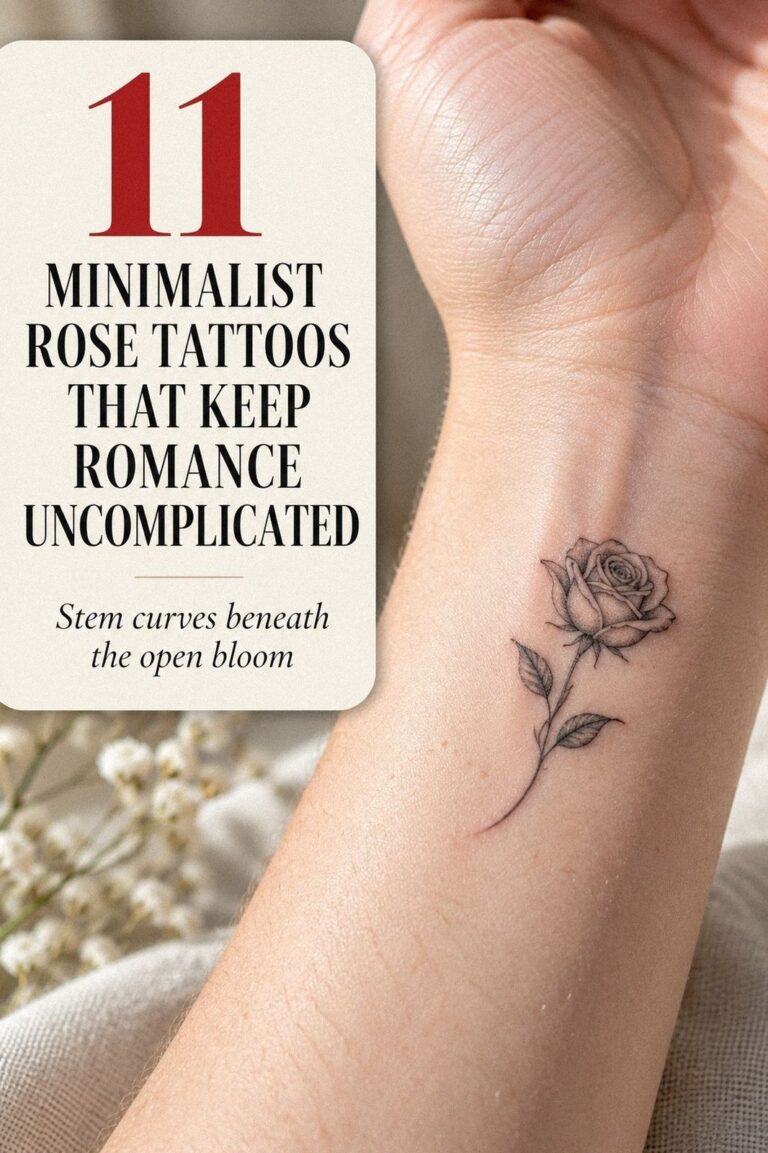
For your reference board, minimalist rose tattoos can help you compare petal shapes. Your final flower could still be a poppy, violet, or flower from your own memory. Ask your artist how the design will adjust to the ankle’s movement.
Ankle tattoos receive friction from socks and shoes. You’ll need to follow aftercare instructions carefully.
Wash gently, use the recommended moisturizer, and avoid soaking the area while it heals. The result can feel soft, symbolic, and quietly feminine without becoming overly ornate.
If you’re weighing cost against longevity, ask whether the flower needs more breathing room. A slightly larger wildflower may hold its shape longer.
That can be worth it when you want a personal tattoo that still looks polished after the first year. A little extra space is often worth it!
3Why Behind-the-Ear Outline Tattoos Work
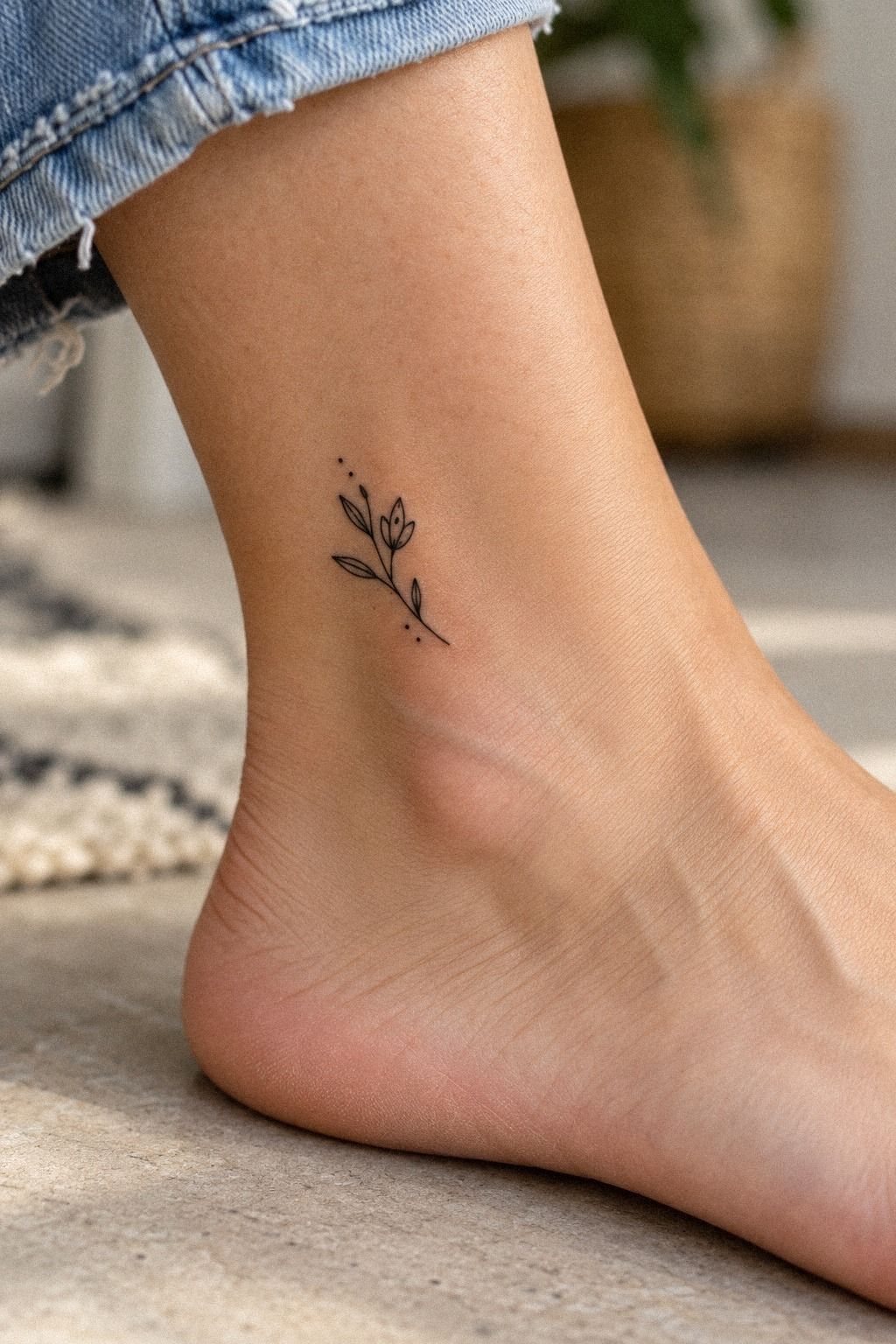
Behind-the-ear tattoos have an edgy appeal because they appear and disappear with your hair. A tiny plum crescent, rose-gold star, or single leaf can suit the placement, but the design should stay simple enough to remain readable when the skin moves. Behind-the-ear placement also deserves careful sun protection because this area is easy to overlook.
4Minimalist Outline Tattoos Featuring Fine Faces
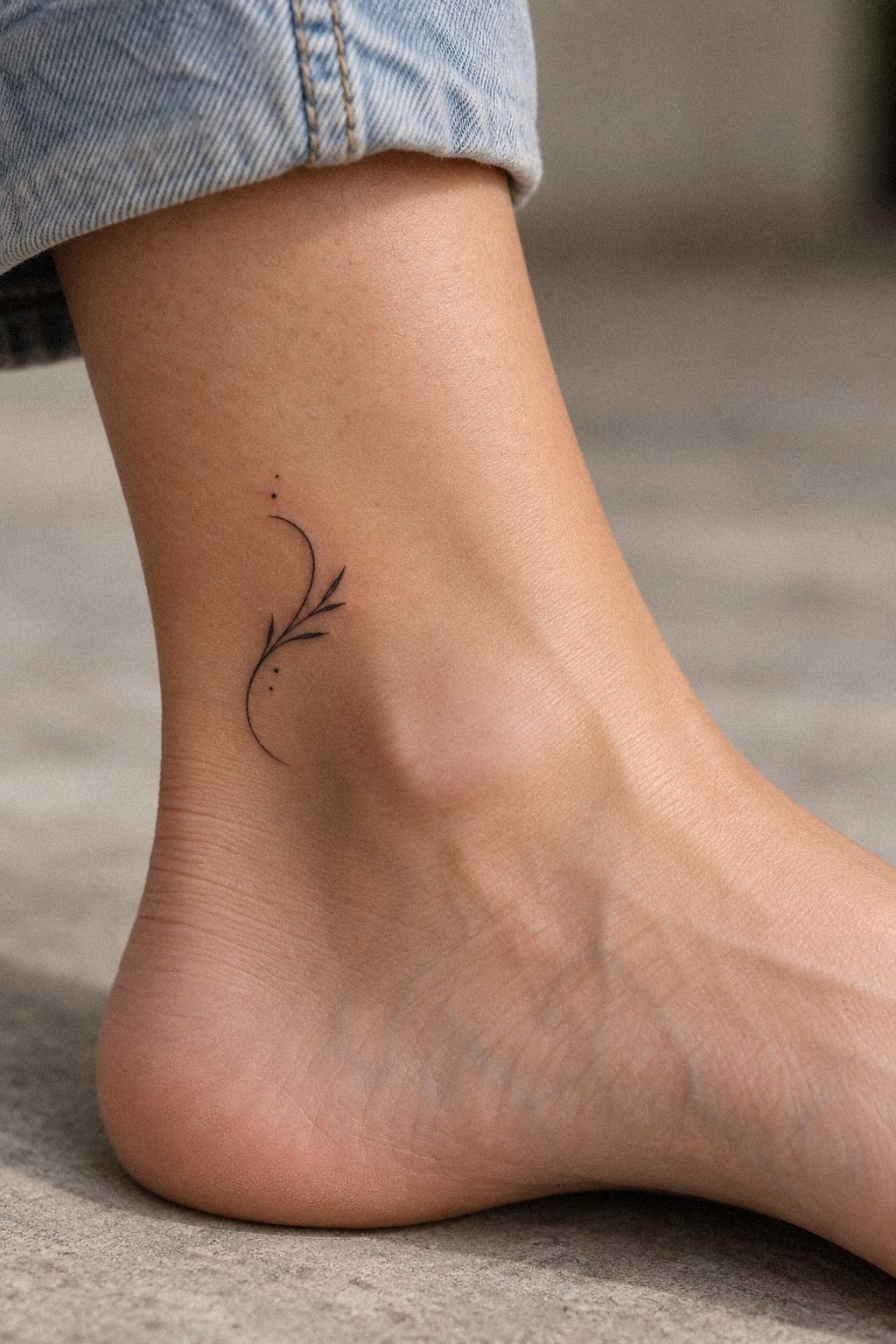
A fine face outline turns a profile into a personal symbol. The strongest versions usually rely on one continuous curve for the forehead, nose, lips, and chin. Continuous black linework gives the design a flowing quality, while a navy-black variation can create a slightly deeper effect without adding heavy shading.
You’ll need enough distance between the features. If the nose, mouth, and jaw are compressed into a tiny mark, the expression may disappear as the ink settles. I’d rather see one graceful profile at three inches than a detailed portrait squeezed into one.
The side of the upper arm or forearm offers a longer path for the design, but it still moves with posture and clothing. Your artist may stretch the design slightly so it follows your body instead of looking rigid. For related placement ideas, browse minimalist small spine tattoos and compare how open skin affects the final image.
This concept can feel sacred, romantic, or haunting depending on the expression. A calm profile reads differently from a sharp, angular face.
Ask yourself what you want to remember when you see it. That answer should guide the line more than a passing trend.
A face outline is also a good test of artist skill. Look for healed examples, not only new work. A healed tattoo portfolio shows whether the eyes, lips, and jaw remain readable after the skin settles.
If your budget allows it, pay for the artist who understands proportion. The cheapest quote may not offer the best value when the design depends on one elegant curve. You’re buying judgment as much as ink.
5What Makes Finger Tattoos Practical?
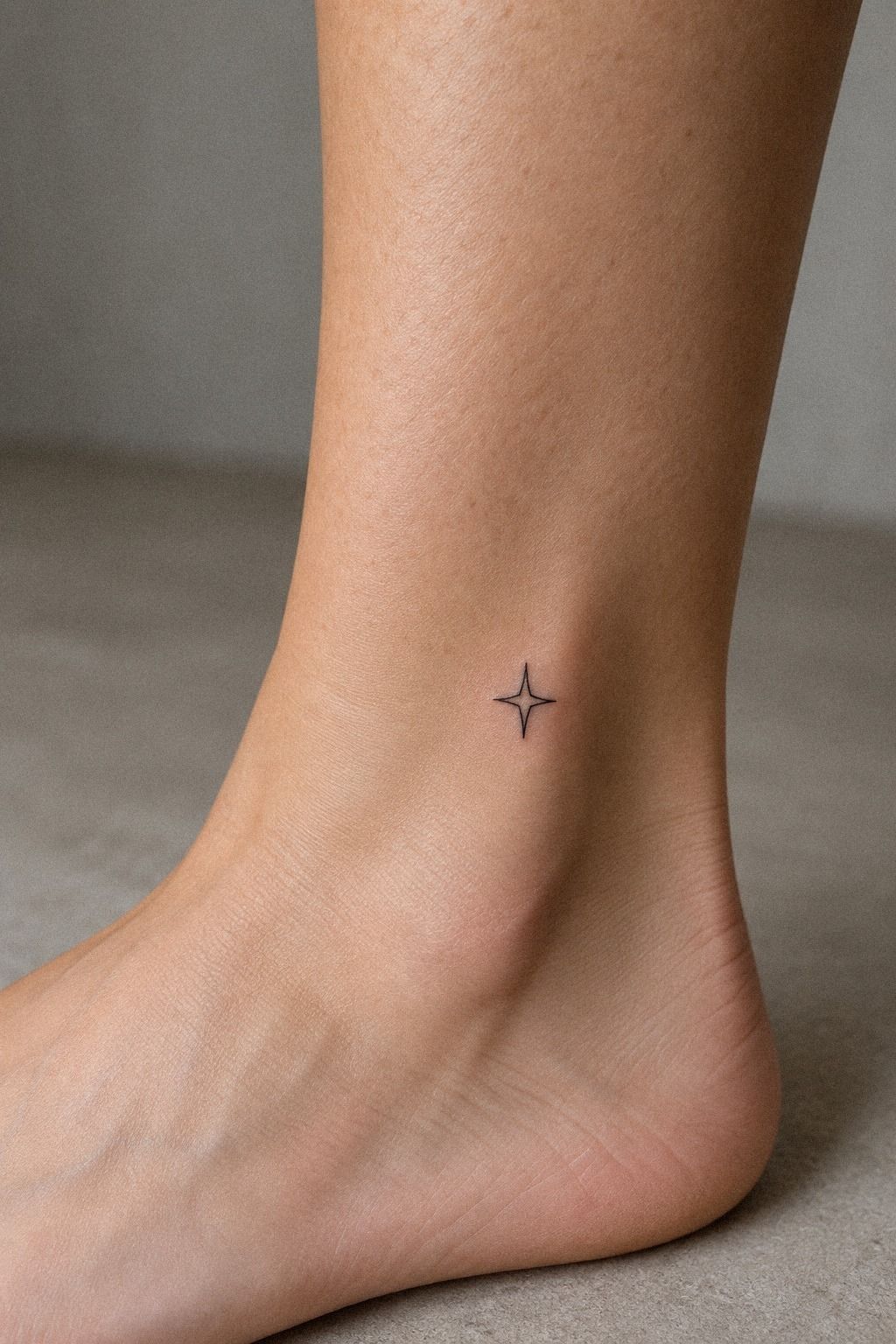
Finger tattoos need practical thinking because hands face friction, washing, sunlight, and constant movement. Finger tattoo care matters even more when the design uses emerald, gold, or cream accents, since lighter pigments may lose contrast sooner than black.
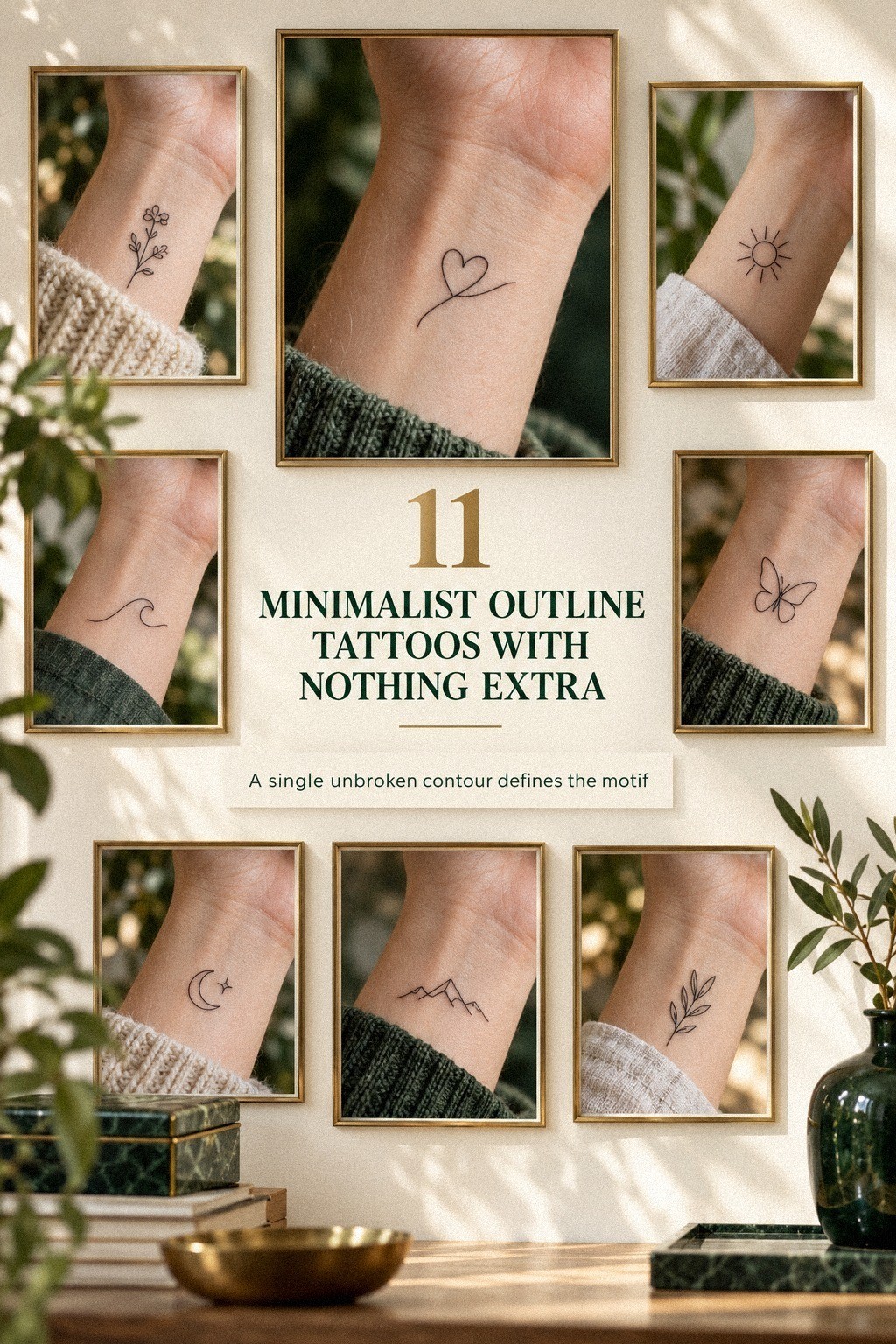
6Minimalist Outline Tattoos with Celestial Symbols
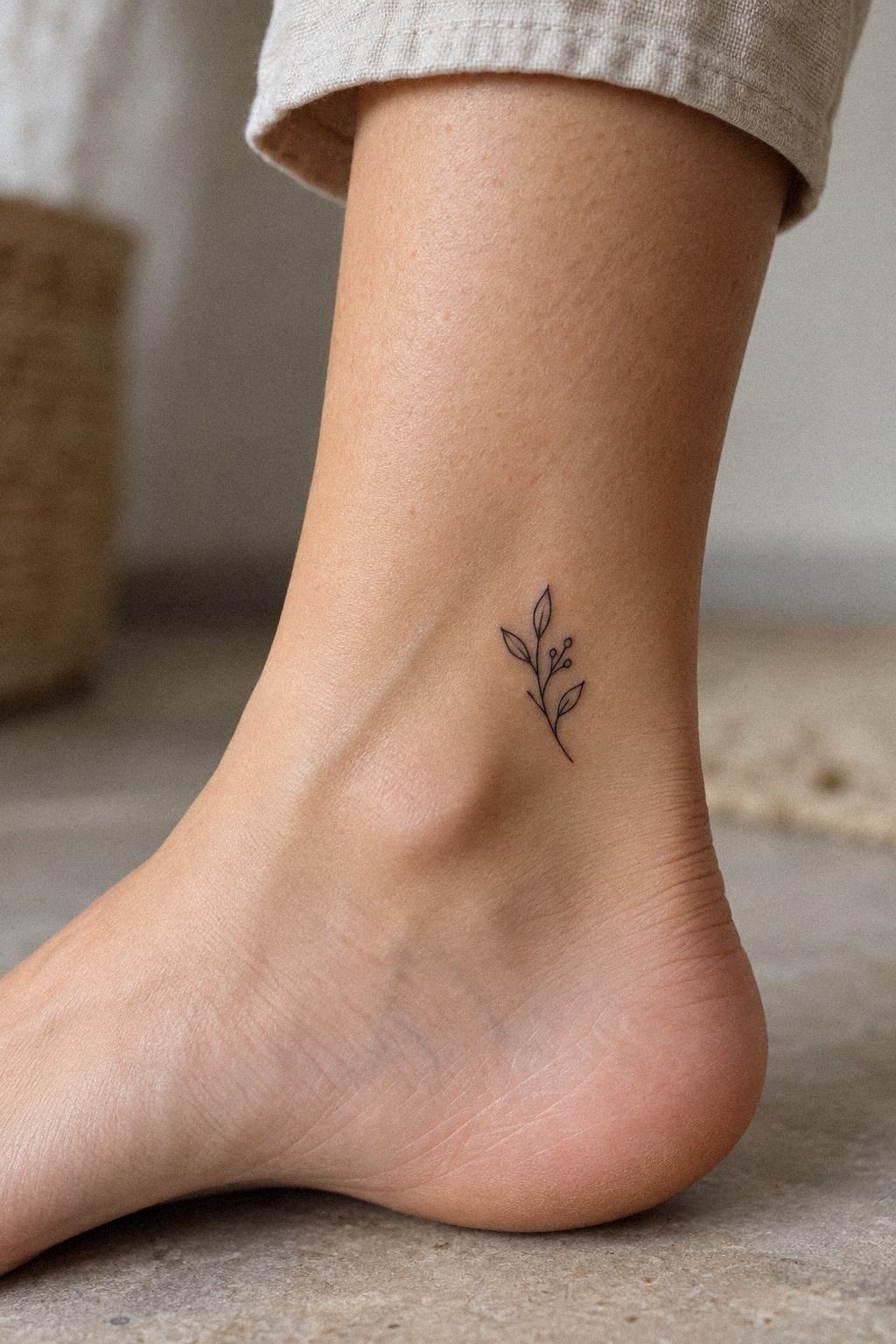
Celestial tattoos give you a symbolic language without requiring a literal image. A thin moon, four-point star, eclipse, or small constellation can feel ethereal on the forearm. Deep black ink helps the outline remain visible, while a forest-green or rust accent can add meaning without making the symbol feel heavy.
You’ll want to decide whether the symbol represents direction, change, protection, or a specific memory. I’d skip copying a random constellation just because it looks stylish. A meaningful star map, birth-month moon, or hand-drawn sun will give your piece more emotional weight.
The forearm is practical because you can watch healing and limit friction. If you’re comparing scale, the examples in minimalist hand wrist tattoos show how small symbols can sit beside natural body lines without competing with them. Forearm healing is usually easier to monitor than healing on the hands or feet.
Ask your artist about line weight before the session. A line that’s too fine may look elegant on day one but soften over time, especially with regular UV exposure. A slightly stronger contour can remain bold and readable for longer.
Celestial tattoos can also carry different moods. A moon may feel feminine, vintage, or protective.
A star can feel daring or playful. Your chosen symbol should reflect your own story rather than a trend you’ll stop enjoying next season.
If you’re deciding between a cheap flash design and a custom sketch, think about meaning. A custom symbol may cost more, but it can offer better emotional value. You’re paying for a design that belongs to you.
7Let the Collarbone Guide the Outline
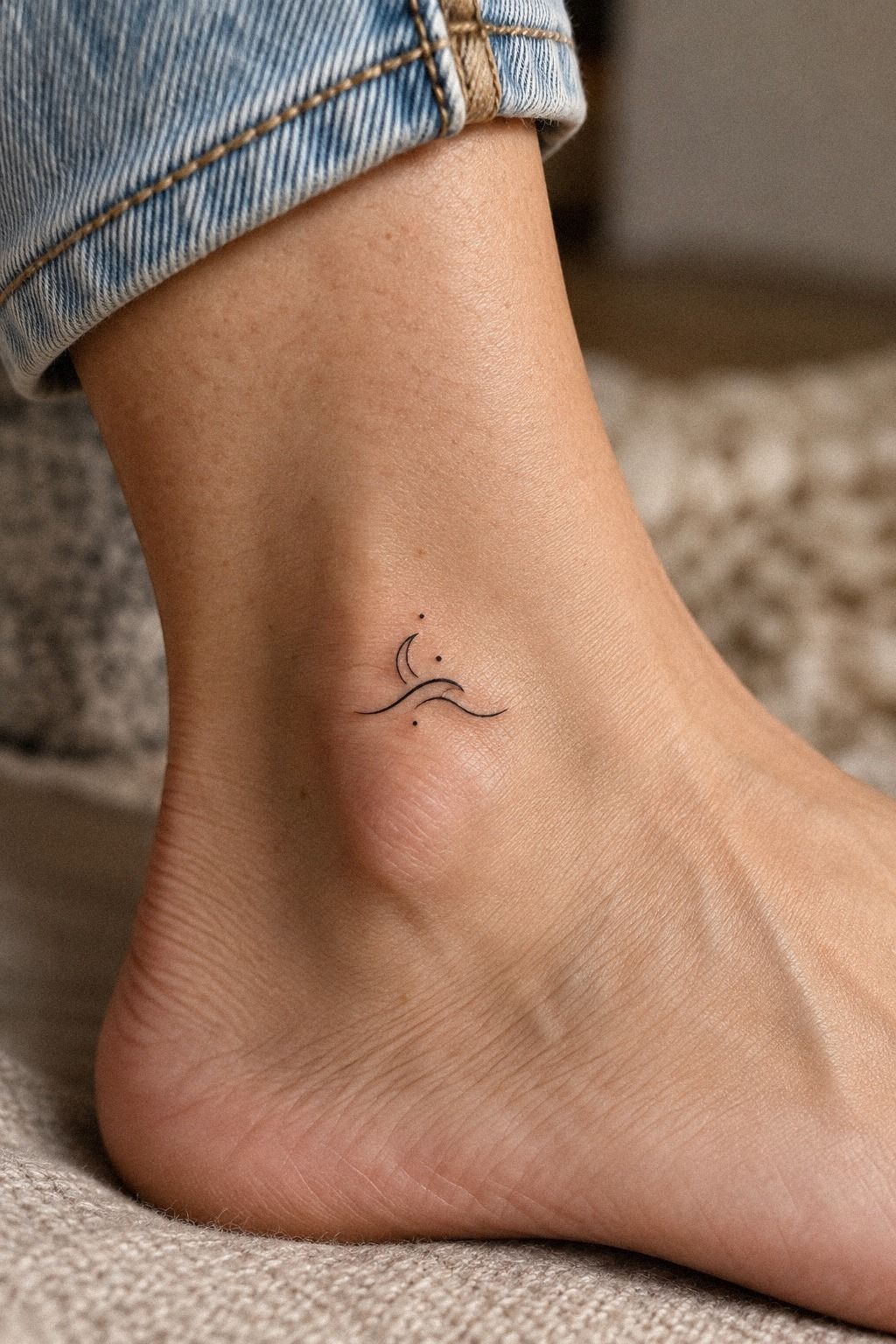
The collarbone gives an outline tattoo a natural horizontal path. A dusty-rose branch, charcoal crescent, or restrained gold detail can follow that line beautifully, but collarbone placement needs enough spacing to prevent a delicate design from looking crowded as your posture changes.
8Minimalist Outline Tattoos Using Single-Line Animals
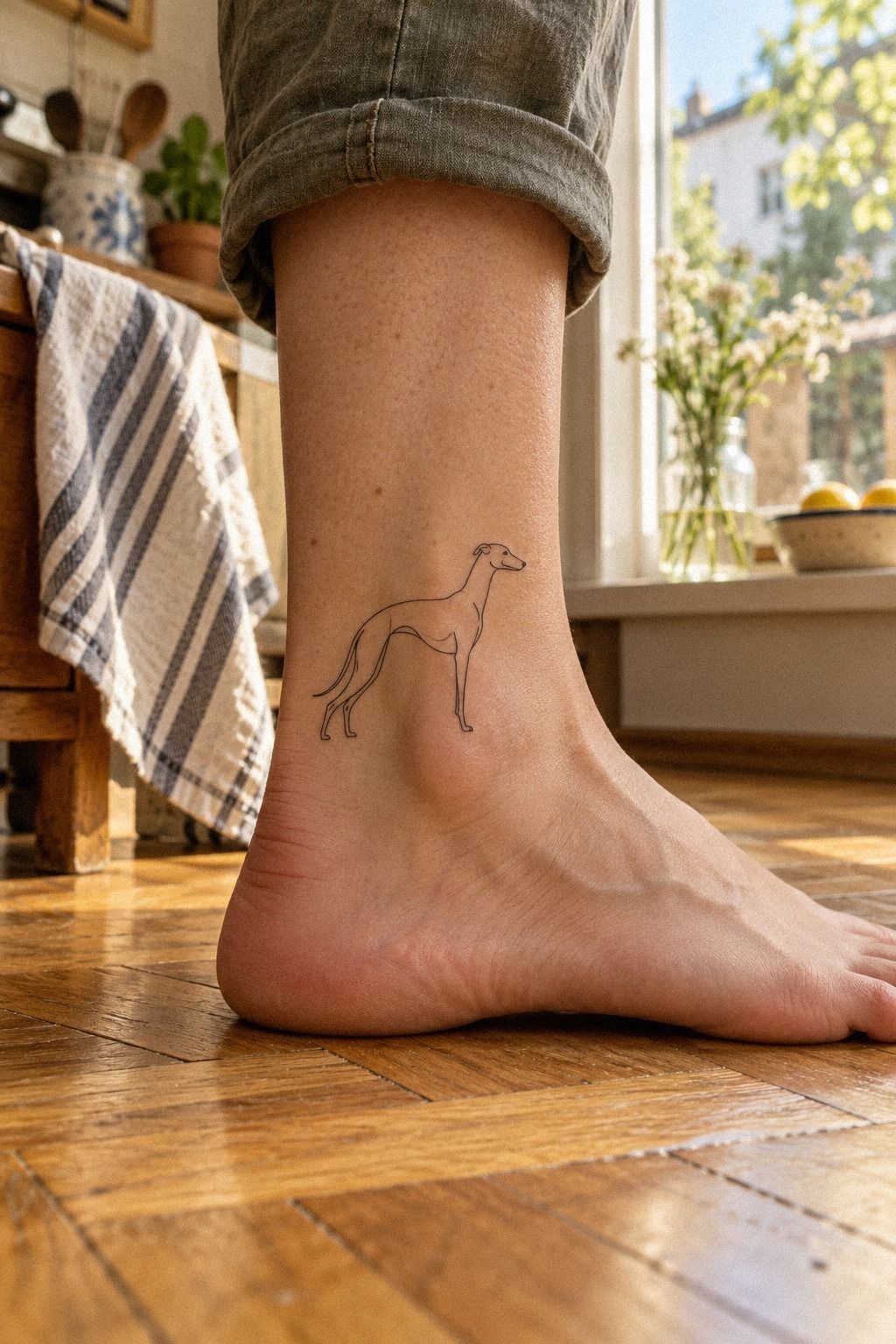
Single-line animals work because your eye completes the shape. A fox, bird, cat, snake, or small horse can emerge from one continuous contour and a few intentional overlaps. Smooth black linework makes the movement easy to follow on a collarbone or forearm, while a subtle camel accent can soften a black-and-white design.
You’ll get a more recognizable result if you pick an animal with a strong profile. I’d choose a curled fox or lifting bird over a detailed animal face at tiny scale. The simpler silhouette feels bold and playful, while too much detail can turn muddy as the ink ages.
Ask your artist to show the drawing at the size it will be tattooed. Enlarged examples can hide weak transitions and awkward tangles. You can also compare minimalist hand tattoos female for ways to keep a small animal expressive without filling the whole area.
Animal silhouette matters more than decoration.
Think about the animal’s meaning before you choose its pose. A resting cat feels different from a running hare.
A snake can feel symbolic and powerful. A bird can feel hopeful or whimsical.
Your final design should carry a little of your personality.
Animal outlines are often worth a custom consultation. The artist can simplify the silhouette without losing its identity.
That may cost more than a copied design, but the result usually feels more personal and balanced. Custom consultation can prevent awkward changes later.
If you want the tattoo to remain readable, resist extra decoration. A few sharp turns can create character. Ten more lines can erase it.
Your best choice may be the version that feels almost too simple. Readable outline should always come before extra detail.
9Minimalist Outline Tattoos with Meaningful Initials
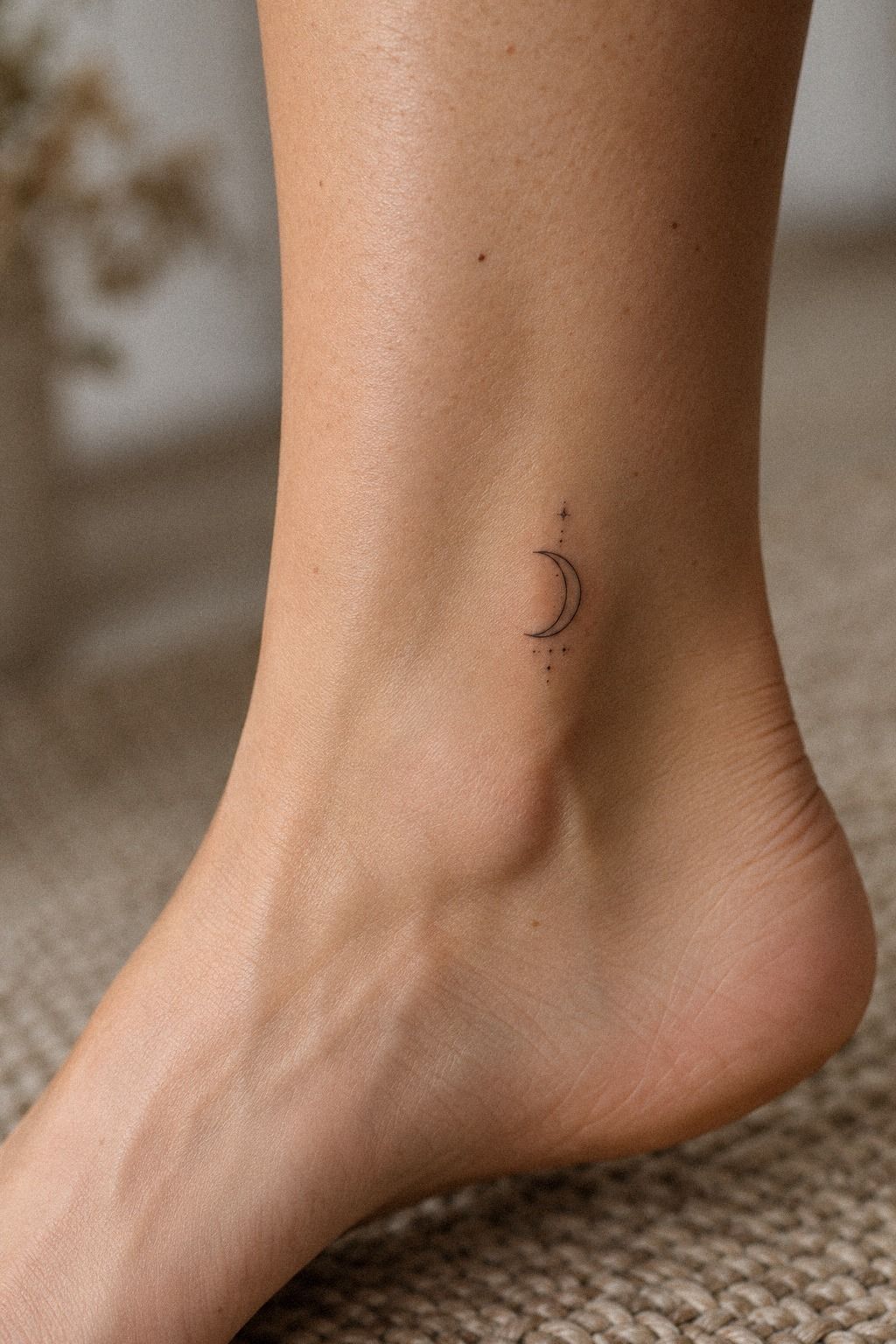
Initial tattoos can be personal without looking obvious. One letter in a crisp serif, a loose handwritten mark, or two linked initials can hold a name, place, or private memory. Archival black ink gives the smallest letterform a clear edge, while midnight blue or copper can work as a restrained accent when the artist confirms the pigment will hold well.
You’ll want to bring several handwriting samples if the letter belongs to someone important. A scanned note, signature, or old card can give your artist an honest starting point.
I’d avoid squeezing three initials into a mark smaller than your thumbnail because legibility matters more than secrecy. Handwriting sample quality can change the final result.
The inner forearm offers a practical area with enough room for a one- to two-inch symbol. If you’re considering the wrist instead, small hand wrist tattoos can help you compare visibility, movement, and scale before you commit. Forearm placement often gives the letter more room to breathe.
Initials can feel meaningful, understated, and timeless, but they should still belong to you. Relationships and seasons change. Choose a letter that represents a value, memory, or part of your own story.
You can also turn an initial into a more expressive mark. Add one delicate curve.
Use a personal handwriting sample. Let one line cross another.
The result can feel intricate without becoming ornate. Custom letterform work gives the symbol a more individual identity.
Before booking, ask what happens if the letter softens. Some fonts tolerate aging better than others.
A slightly heavier stroke may look less dainty on day one, but it can offer stronger long-term value. Font choice matters as much as the initial itself.
10Compare Ankle and Foot Placements
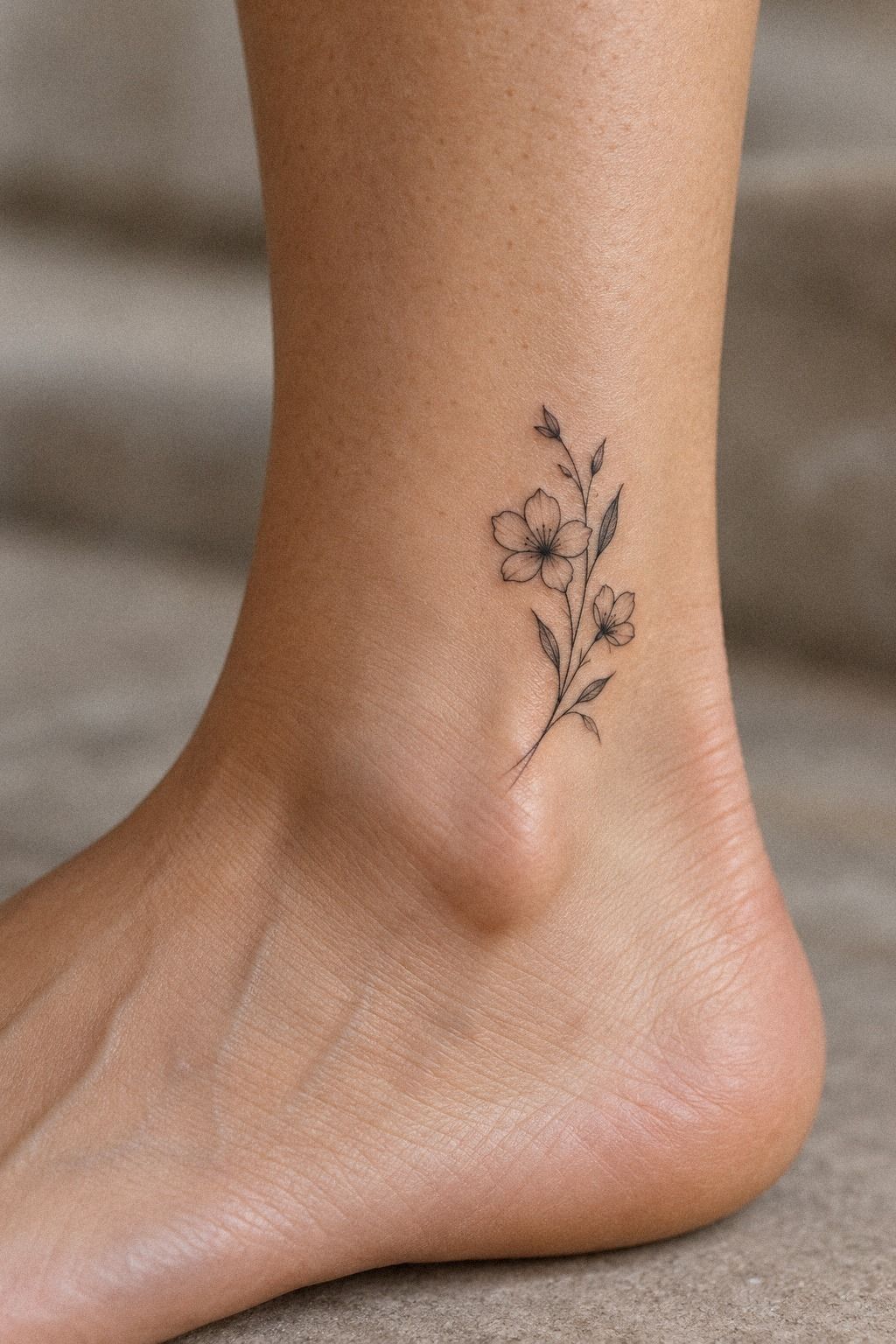
Ankle and foot tattoos need extra planning because shoes, socks, sweat, and friction all affect healing. Ankle and foot care becomes especially important when you’re considering sage-green or cream accents that may require a stronger outline to stay readable.
11Minimalist Outline Tattoos with Delicate Geometric Shapes
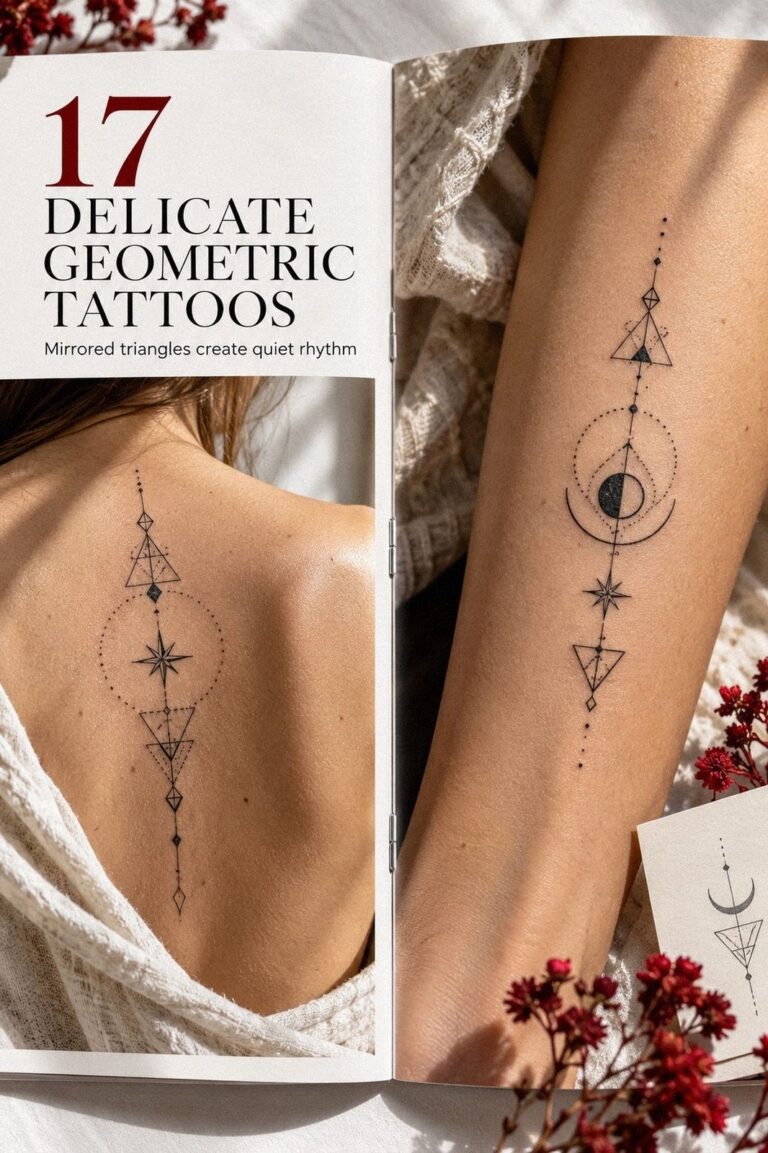
Geometric outlines can feel clean without becoming severe. A small triangle, imperfect circle, intersecting arc, or open diamond gives you structure while leaving plenty of skin visible. Fine black geometric linework looks especially sharp on the calf, where the longer area lets the shape remain legible.
You’ll need to decide whether the design should be mathematically even or slightly handmade. I prefer controlled imperfection because a perfectly rigid shape can feel cold on the body. Your artist can use a stencil and measured points while keeping the final line expressive.
The calf is often more tolerable than the foot, ribs, hands, or sternum. It also gives you enough distance for a one- to three-inch design.
If you’re comparing body placements, unique minimalist outline tattoos can help you see how scale changes the mood. Calf placement gives delicate geometry more support.
Protect healed geometric tattoos from direct UV exposure. Sunlight can soften fine lines over time.
A good artist, sensible placement, and solid black ink give you a stronger chance of longevity. UV protection should remain part of your routine.
A geometric tattoo can feel sleek, sharp, and quietly powerful without extra decoration. You might choose a triangle for resilience or an imperfect circle for continuity. The meaning doesn’t have to be obvious to anyone else.
If you’re deciding whether precise geometry is worth the price, look at healed work. Straight lines reveal weak technique quickly.
A skilled artist may charge more, but clean execution is part of the value. Healed geometric work is the best evidence.
Choose the Symbol Before You Choose the Size
I used to start with measurements. Now I start with the reason.
A symbol feels more personal when you know what it needs to say, even if nobody else understands it. A custom tattoo concept should begin with memory, not a random search result.
Write down three words before you meet your artist. Maybe yours are protection, change, and family. Those words can guide the shape, line weight, and placement.
They can also stop you from adding details that don’t serve the idea.
You don’t need a dramatic story. A tiny initial can honor someone.
A flower can mark recovery. A star can remind you to keep moving.
Your meaning may be quiet, but it can still feel empowering. Symbolic meaning gives a simple mark more staying power.
If you’re torn between several symbols, sketch each one at the same size. Then view them from a normal distance.
The most intricate drawing may not be the most expressive. Often, the simplest outline has the strongest emotional pull.
Minimalist rose tattoos can be a useful comparison if you’re weighing floral symbols. Floral outline simplicity often improves longevity.
Make the Placement Earn Its Meaning
Placement changes the feeling of a tattoo. A moon behind your ear feels private.
The same moon on your forearm feels more visible. Body placement planning helps your design and your daily life work together.
Ask yourself who will see it. Think about your work, clothing, exercise, and sun exposure. You don’t need to hide a meaningful tattoo, but you should understand how often it will be visible.
Movement matters too. A rigid circle may distort near a joint.
A flowing branch may look natural along a collarbone. Your artist can adjust the stencil so the design follows your body instead of fighting it.
If you want a discreet starting point, revisit minimalist small wrist tattoos and compare how size affects visibility. A smaller mark isn’t automatically more understated if it loses its shape. Placement consultation can settle that question early.
Read Fresh Ink With Realistic Expectations
New tattoo ink can look darker and sharper than healed work. That doesn’t mean your tattoo failed.
The skin is still recovering, and the surface may change as it settles. Healed tattoo examples give you a more useful standard.
Ask to see work at several healing stages. You want to know how the artist’s lines settle after a few months. You also want to see whether small gaps remain open.
Healing timeline details can make the consultation more honest.
Your result may become softer. That can still look elegant.
The goal isn’t frozen perfection. The goal is a readable, personal mark that ages in a way you can accept.
If you’re comparing artists, request healed examples of the same style. New ink proves very little.
A healed outline tells you far more about technique, spacing, and value. Small outline tattoos can also help you compare how simple designs hold their structure.
Line retention matters more than first-day sharpness.
Ask These Questions Before You Book
Ask how the artist chooses line weight for your skin and placement. Ask how the design will be simplified at its real size. The line-weight plan should leave you feeling informed, not rushed.
Ask about the shop minimum and the full estimated cost. Confirm whether a touch-up is included. A clear answer helps you compare value instead of choosing based on the lowest number.
The complete tattoo cost should be clear before you pay a deposit.
Ask what aftercare products they recommend. Ask when you can exercise, swim, or return to tight clothing.
You’re responsible for healing, but your artist should give you practical instructions. Aftercare guidance should be specific to your placement.
Bring your reference, but stay open to edits. A skilled artist may remove a detail or widen a gap.
That isn’t a loss. It may protect the meaning and readability of the final tattoo. You can bring examples from minimalist hand tattoos female if that style matches your idea.
Set a Budget That Protects the Result
A tattoo budget should include more than the initial session. You may need a shop minimum, deposit, tip, aftercare supplies, or later touch-up. The complete tattoo cost is easier to judge when you include those details.
Cheap work can be tempting when the design looks simple. Yet minimalist tattooing leaves little room for mistakes. One uneven curve can change the whole impression.
Paying for experience may be worth it.
That doesn’t mean the most expensive artist is always right for you. Look for consistency, healed work, clean practices, and a style that matches your idea. An artist portfolio can reveal whether the fit is reliable.
If you need a starting estimate, ask for a written range. Then ask what could raise it. You’ll know whether the design fits your budget before the appointment.
Unique minimalist outline tattoos can help you compare how detail changes with scale. A written estimate protects both sides.
The Three-Line Rule Behind Minimalist Ink
I used to think minimalist tattoos were easy because they contained fewer marks. That assumption cost me a good sketch.
The fewer lines you have, the more responsibility each one carries. The three-line rule asks whether each mark earns its place.
I now ask three questions before I approve a design. Does the outline read at its real size?
Does it suit the movement of my skin? Will the meaning still matter if the trend disappears?
Your answer doesn’t need to be dramatic. A small initial can carry grief, love, or family history. A flower can mark recovery without explaining itself.
A geometric shape can remind you of a promise you made privately. Private meaning is still meaningful.
I’ve also learned to respect the artist’s judgment about line weight. I once pushed for an almost invisible contour because I wanted the tattoo to look delicate.
The artist increased it slightly, and I’m glad they did. After healing, the line still looks crisp instead of disappearing into my skin.
The artist’s judgment protected the design.
If you’re choosing between a smaller design and a slightly larger one, I’d pick the size that protects readability. You don’t need a huge tattoo to make a lasting statement. You need a shape your skin can support, an artist who understands fine linework, and patience while it settles.
That’s the whole method!
What People Always Want to Know
How much does a minimalist outline tattoo usually cost?
A minimalist outline tattoo often costs about $100 to $300 in the US. Shop minimums may sit near $50 to $100. Hourly rates often fall around $100 to $250.
The final price depends on your artist, region, size, placement, and detail. Ask for a full estimate before you pay a deposit.
Are minimalist outline tattoos a good idea for a first tattoo?
Yes, they can be a strong first choice because the designs are often compact and readable. A practical placement such as the forearm, thigh, or shoulder may feel more tolerable than ribs, feet, hands, or sternum. I’d still choose an artist with healed examples.
How do I choose a tattoo artist for minimalist outline tattoos?
Choose an artist whose portfolio shows clean lines, healed examples, consistent spacing, and strong placement decisions. A healed portfolio tells you more than new tattoo work. Check studio hygiene, ask about single-use supplies, and bring your reference at the intended size.
How much do minimalist outline tattoos hurt?
Pain varies by person and placement. Ribs, feet, hands, and sternum are commonly more sensitive because they have less padding or sit near bone. More tolerable areas often include the forearm, thigh, and shoulder.
Your artist can pause if you need a moment.
How long does a minimalist outline tattoo take to heal?
The surface usually heals in about two to three weeks. The tattoo may take roughly two to three months to settle completely. Simple healing care includes gentle washing, recommended moisturizer, avoiding pools, and limiting sun exposure during the early stage.
What’s the best placement for minimalist outline tattoos?
The best placement depends on visibility, pain tolerance, movement, and friction. Forearms and thighs are often practical for readable lines. Wrists, fingers, feet, and ankles need more care because they face daily movement and sun.
Can minimalist outline tattoos fade or spread?
Yes, very fine lines can soften or spread over time. UV exposure, friction, and constant bending can speed that process. Strong black ink and sensible placement often age better than extremely pale lines packed into a tiny design.
Ask your artist how the piece may settle.
Should I choose black ink or gray ink?
Black ink usually offers stronger contrast and readability. Gray can create a softer, more delicate effect, but it may fade sooner on some placements. Your skin tone and placement should guide the decision.
Let your artist explain what will remain visible after healing.
Where I’d Start First
If I had to pick one, I’d start with a small wildflower outline on the ankle. It has enough shape to stay readable, but the stem still feels personal and delicate. You can compare it with minimalist rose tattoos before booking your artist.
If you prefer something more discreet, I’d choose a tiny celestial symbol behind the ear. If you want stronger visibility, I’d choose a simple animal or initial on the forearm. Your final tattoo choice should fit your meaning, your budget, and the way you actually live.
Take your time. Save references. Ask better questions.
A minimalist outline may use very little ink, but the decision behind it can remain meaningful for years. That’s what makes the style so striking!