Small rose tattoos can stay crisp for years when you choose the silhouette, placement, and line weight before you book. I learned that after sketching a delicate bloom that looked graceful on paper but crowded the skin. This guide gives you an affordable order to follow, from first sketch to aftercare. Start small, but plan boldly!
- Start With Fine Line Rose Sketches: The Single-Bloom Map
- Pick a Single Bloom Silhouette: The Crisp-Outline Rule
- Place Tiny Roses Behind Your Ear: The Hidden-Visibility Balance
- Keep Petals Crisp And Uncluttered: The Negative-Space Test
- Plan Stem Direction Around Your Wrist: The Flash-Sheet Filter
- What Does a Meaningful Rose Need? The Symbol Pairing Method
- Add Subtle Color To Small Petals: The One-Tone Accent
- Match Thorn Details To Your Style: Soft Curves Over Sharp Spikes
- Test Unique Rose Tattoos On Paper: The Rotation Check
- Protect Delicate Linework During Healing: The Three-Stage Care Plan
- Highlight Small Roses With Sharp Contrast: The Deep-Skin Read
1Start With Fine Line Rose Sketches: The Single-Bloom Map
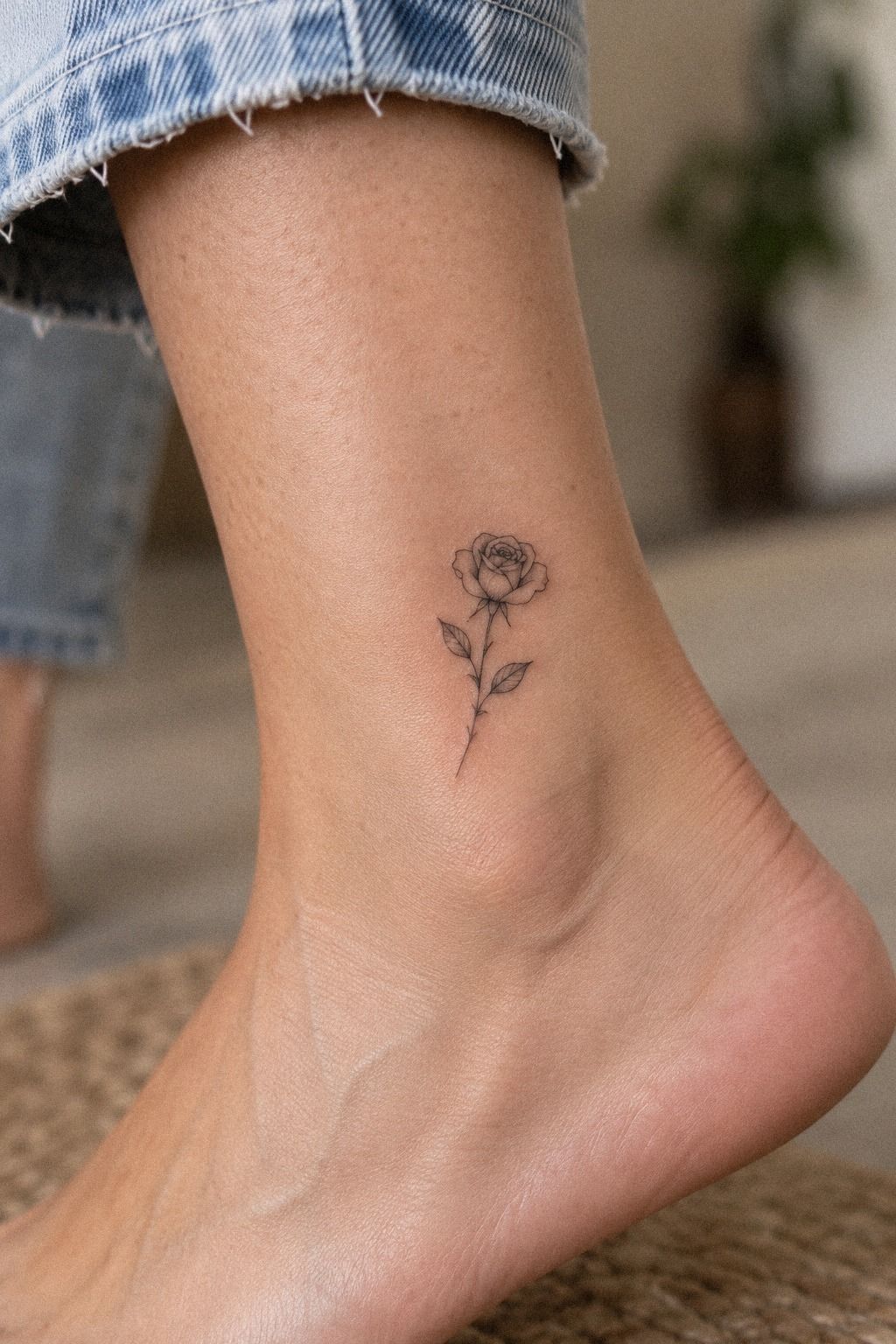
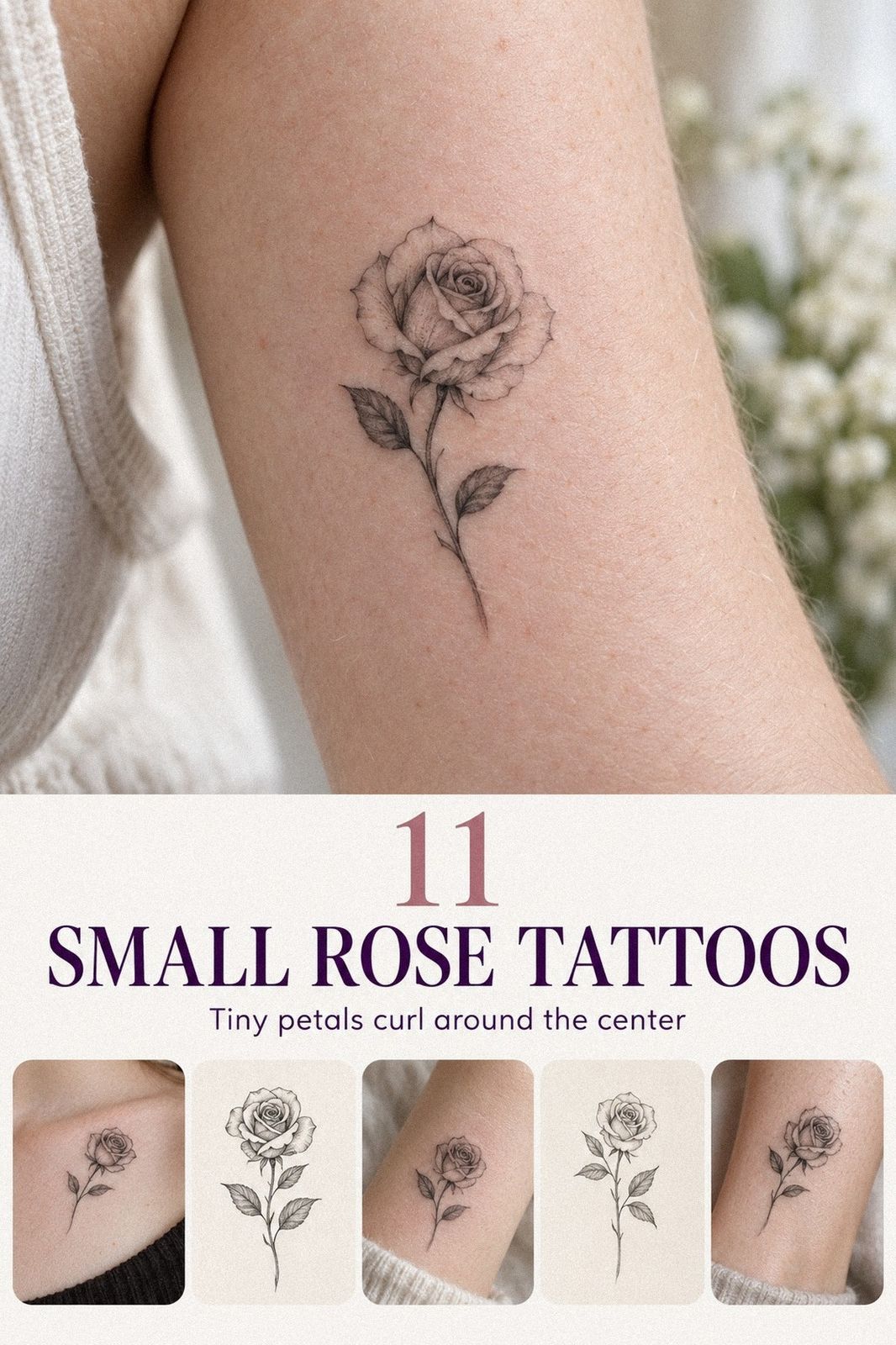
Begin with a profile rose rather than a front-facing bloom. You’ll see the layered petals more clearly, and your artist can keep the outline flowing instead of forcing every fold into a tiny circle.
For a striking sternum design, bring a reference with one rose, open skin, and short outer-petal lines. That gives your artist a useful starting point.
Ask for three sketch variations before you settle. One can be minimal, one more intricate, and one slightly ornate. Fine-line tattoo ink looks crisp when the design has breathing space, but it can spread as skin ages.
You don’t want six tiny interior petals competing for attention.
I’d skip a hyper-realistic rose at this size. It’s expressive on a screen, yet muddy on skin. A sleek outer contour and one memorable petal fold usually create a more polished result than a miniature study of every crease.
Your sketch should show the bloom, stem direction, and approximate placement. If you’re planning a central sternum piece, let your artist check how the design follows your natural line when you’re standing and sitting. That small adjustment makes the rose feel personal rather than stamped on.
Print the sketch, hold it against your skin, and look at it under bright and dim light. A bold outer contour should still read when the interior detail softens.
That’s the honest test. Before your consultation, compare the symbolism with this small tattoos meaning guide.
2Pick a Single Bloom Silhouette: The Crisp-Outline Rule
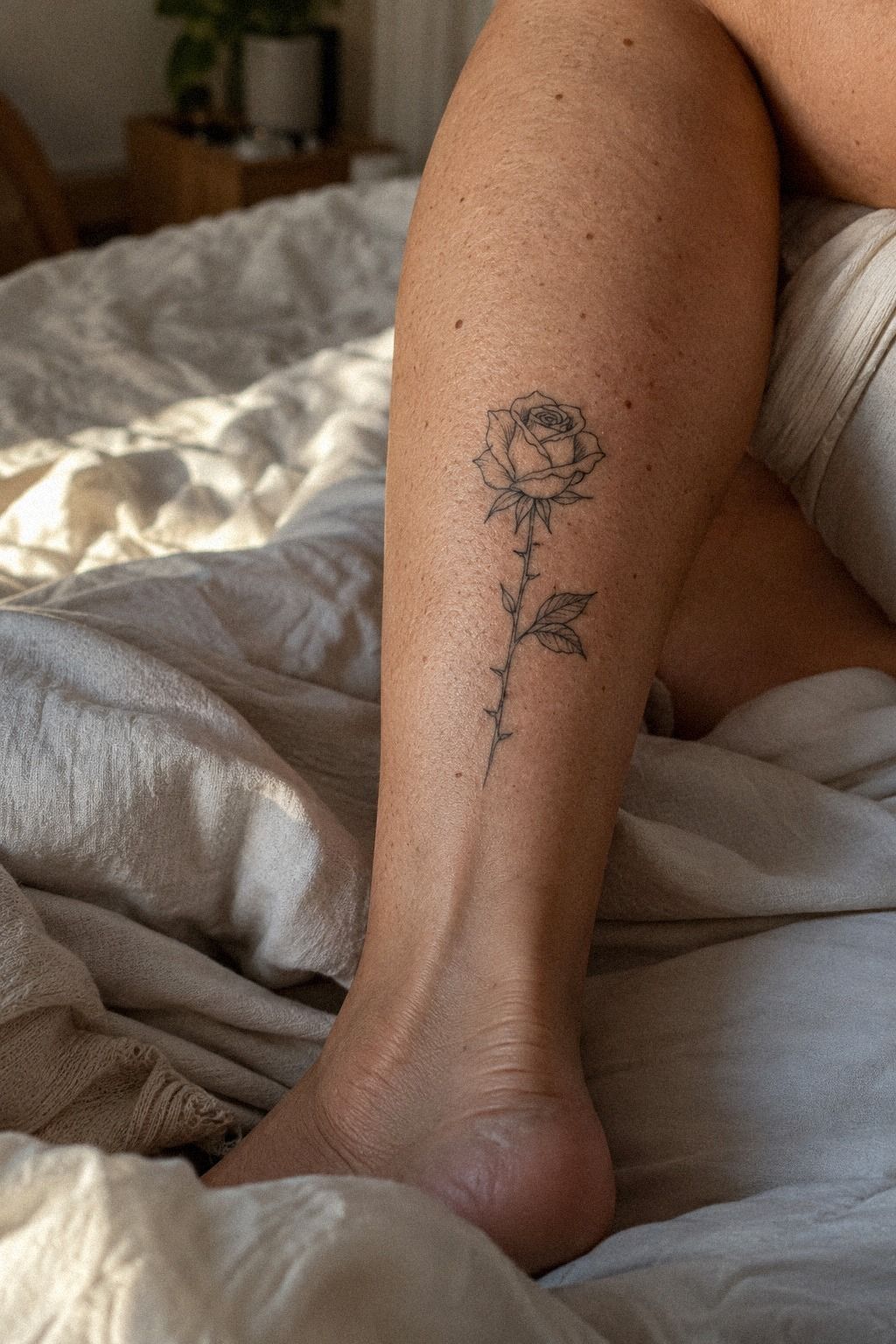
Choose one clear bloom silhouette before adding leaves, lettering, or a second flower. One-bloom structure keeps the design readable and gives a small rose a more iconic presence.
3Place Tiny Roses Behind Your Ear: The Hidden-Visibility Balance
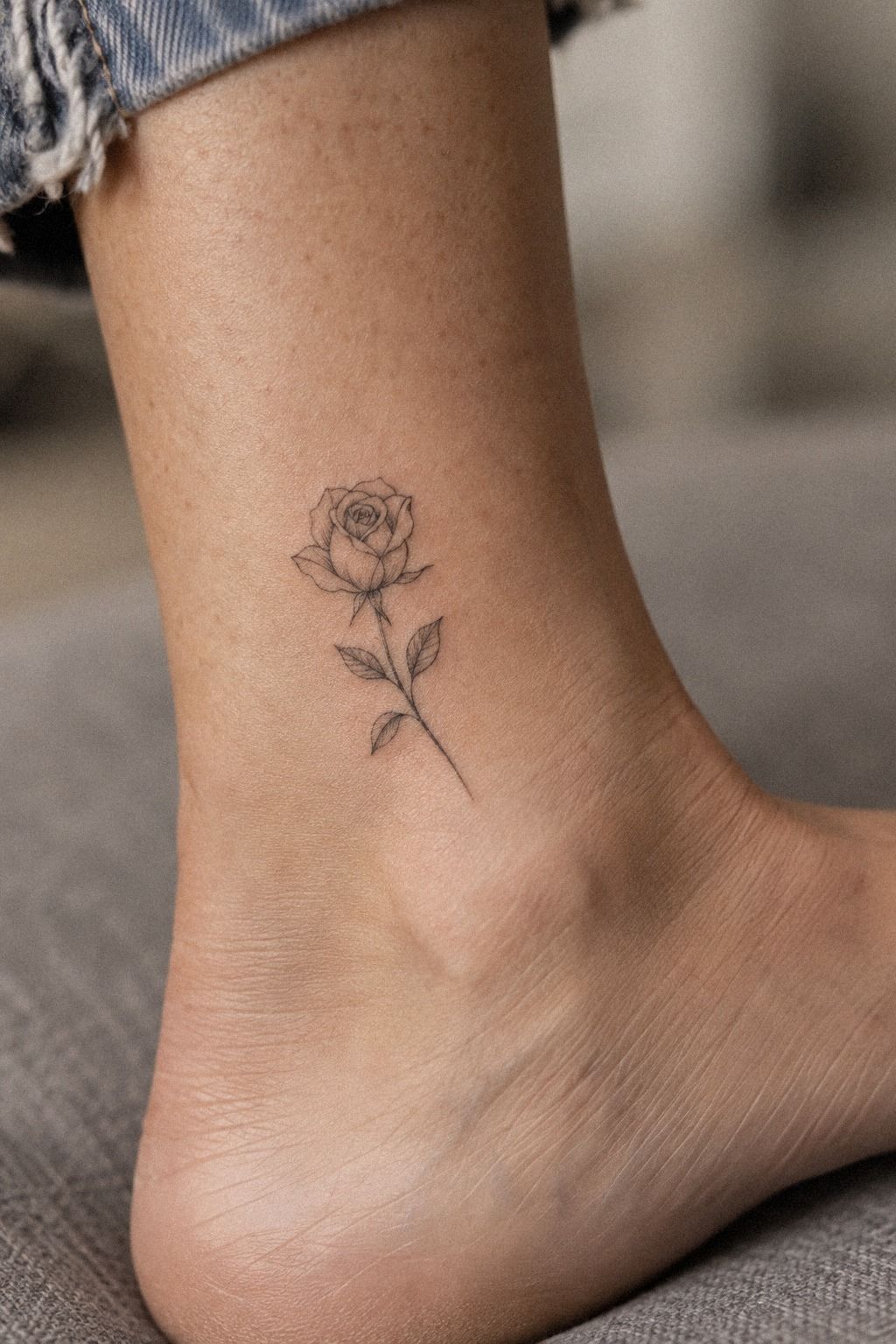
Behind-the-ear placement works when you want a dainty rose that can disappear under your hair and reappear when you tuck it back. Ask your artist to angle the bloom so its profile faces forward, not straight toward the back of your head. That direction keeps the design legible from the side.
For medium olive skin, a plum-toned outline with a restrained rose-colored accent can look sharp and personal. Stencil transfer paper helps your artist test the angle before the needle starts. Turn your head naturally during that check, because a tiny rose can look enchanting in one position and oddly tilted in another.
Keep the outer petals simple. Behind the ear isn’t the place for a miniature bouquet, because the curved surface and frequent movement already make the work demanding. If you’re drawn to discreet placements, browse these small tiny hand tattoos for another way to balance visibility with privacy.
Think about practical exposure, too. Hair products, headphones, helmets, and regular sun can affect the area, so you’ll need to follow your artist’s care directions closely. A polished design gives you more room for normal wear than a fragile web of micro-details.
4Keep Petals Crisp And Uncluttered: The Negative-Space Test
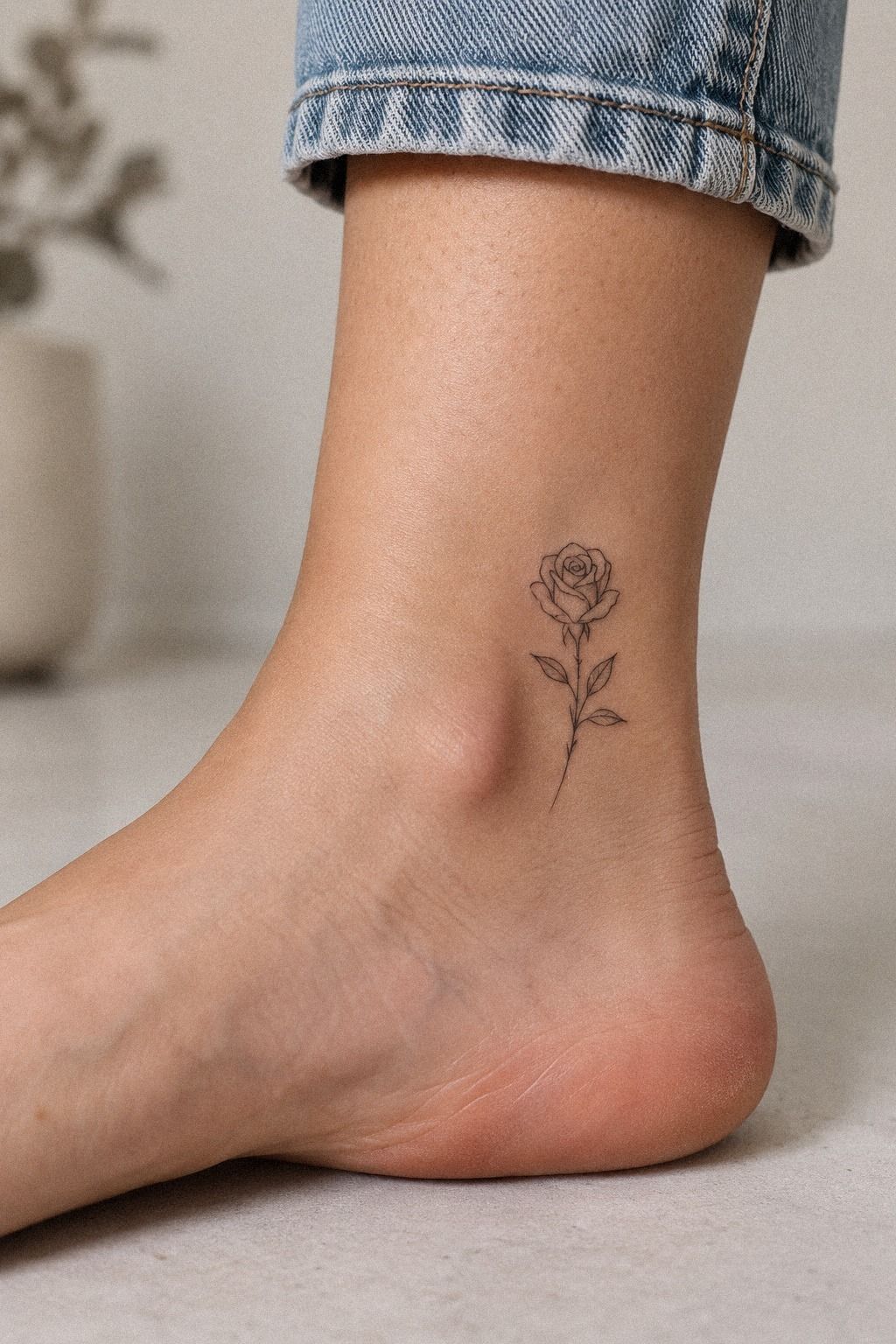
Count the major petal shapes before you approve the stencil. You’ll want each dark mark to explain the flower. If a line doesn’t clarify shape, ask whether it needs to stay.
Negative space is the quiet area between the petals, and it’s doing real work here. Leave enough of it for the design to breathe as the tattoo settles.
I’m wary of tiny parallel lines packed into a small bloom. They look understated during the appointment, but they’re more likely to blur together over time.
Ask your artist to show you the stencil in a mirror and in a quick phone photo. Your eye may love the design close up, while the camera reveals that the petals have merged into one dark patch. If you’re considering another discreet placement, compare it with these small side finger tattoos and notice how much simpler the shapes need to be.
What good is an intricate rose if you can’t read it after the skin has healed? Keep the center crisp, the outer edge confident, and the smallest marks optional.
That gives your tattoo a graceful outline instead of a crowded one. That’s the point!
5Plan Stem Direction Around Your Wrist: The Flash-Sheet Filter
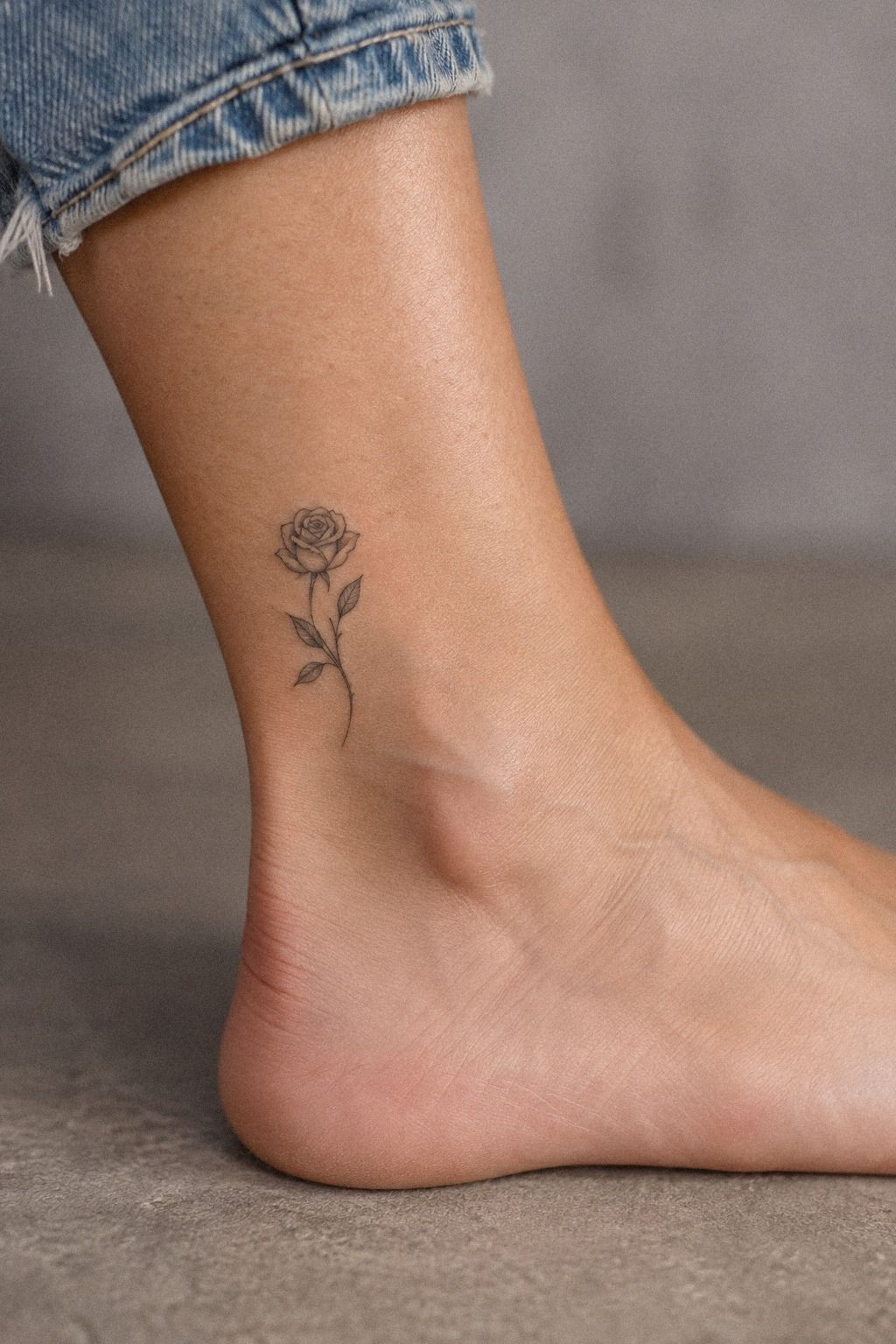
A wrist rose needs a stem direction that agrees with your daily gestures. Stem direction can make the design feel bold and intentional when your hand turns, bends, or rests.
6What Does a Meaningful Rose Need? The Symbol Pairing Method
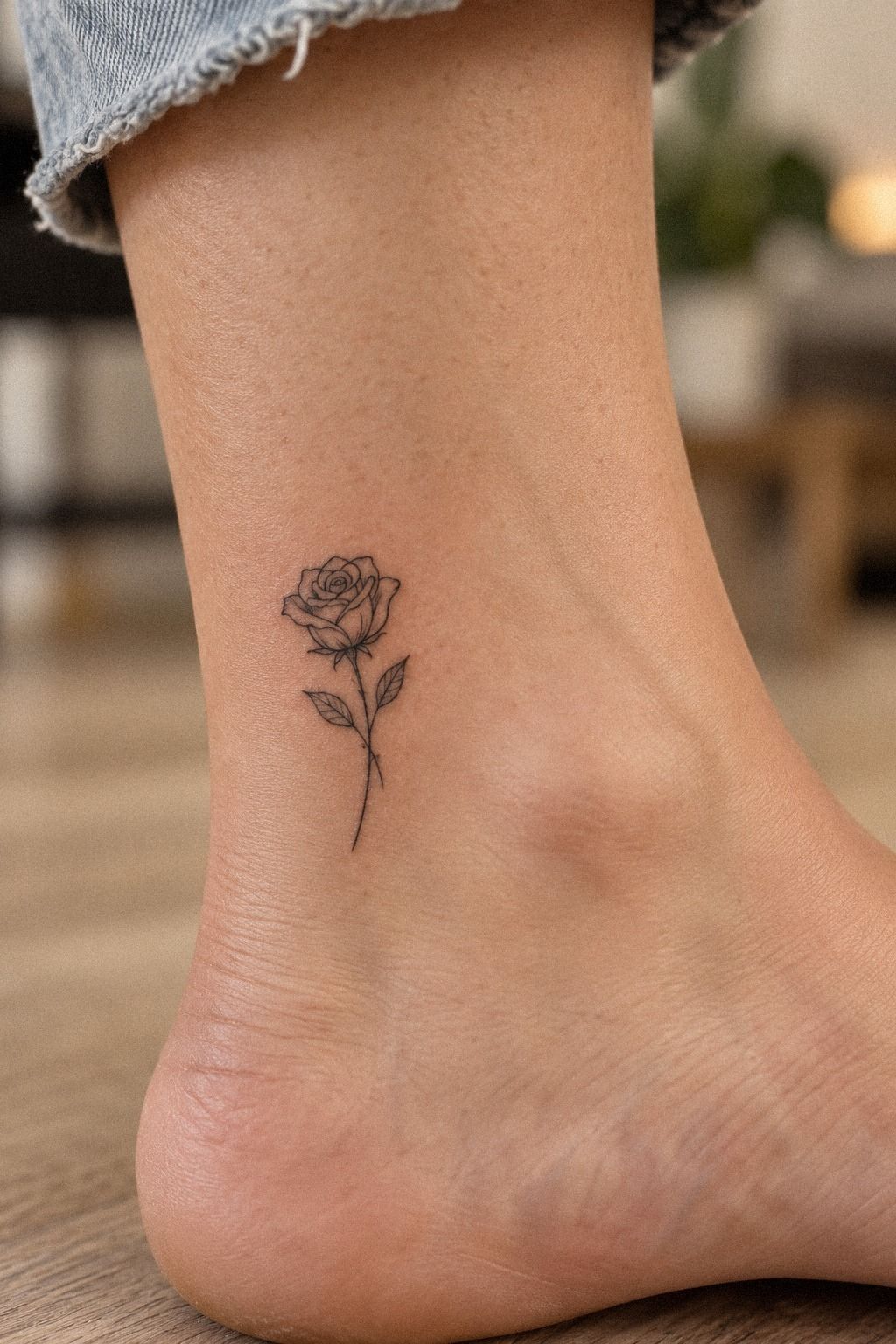
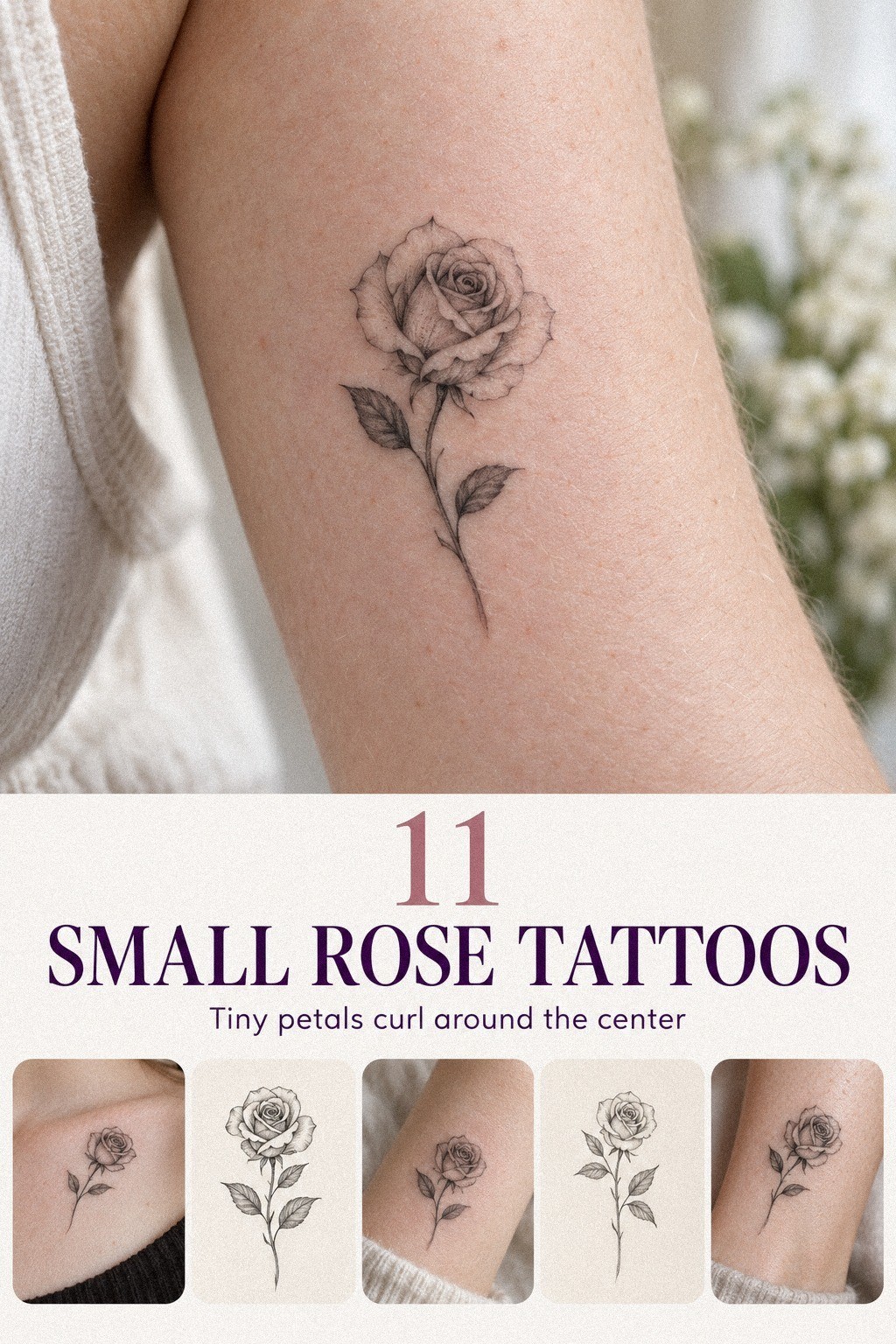
Give the rose one specific meaning before you add symbolism. It might mark a person, a place, a recovery, or a private promise. Black tattoo pigment can carry a powerful symbol on its own, so you don’t need an emblem attached to every part.
Write down three words that describe the reason you want it. Maybe they’re “grief, growth, and courage,” or “mother, garden, and summer.” Then let your artist translate one or two words into the stem, thorn, or petal shape. That makes the design expressive without making it complicated.
I’d skip adding dates, initials, and multiple leaves unless each one earns its place. A personal tattoo becomes less stylish when the viewer has to decode ten separate symbols. For more context, read this small tattoos meaning guide before you turn every feeling into a separate mark.
Meaning doesn’t have to look solemn. A playful curve, a dainty bud, or one fierce thorn can reflect your actual personality better than a dramatic composition. Pick the detail you’ll still recognize emotionally when the trend has moved on.
Trust that!
7Add Subtle Color To Small Petals: The One-Tone Accent
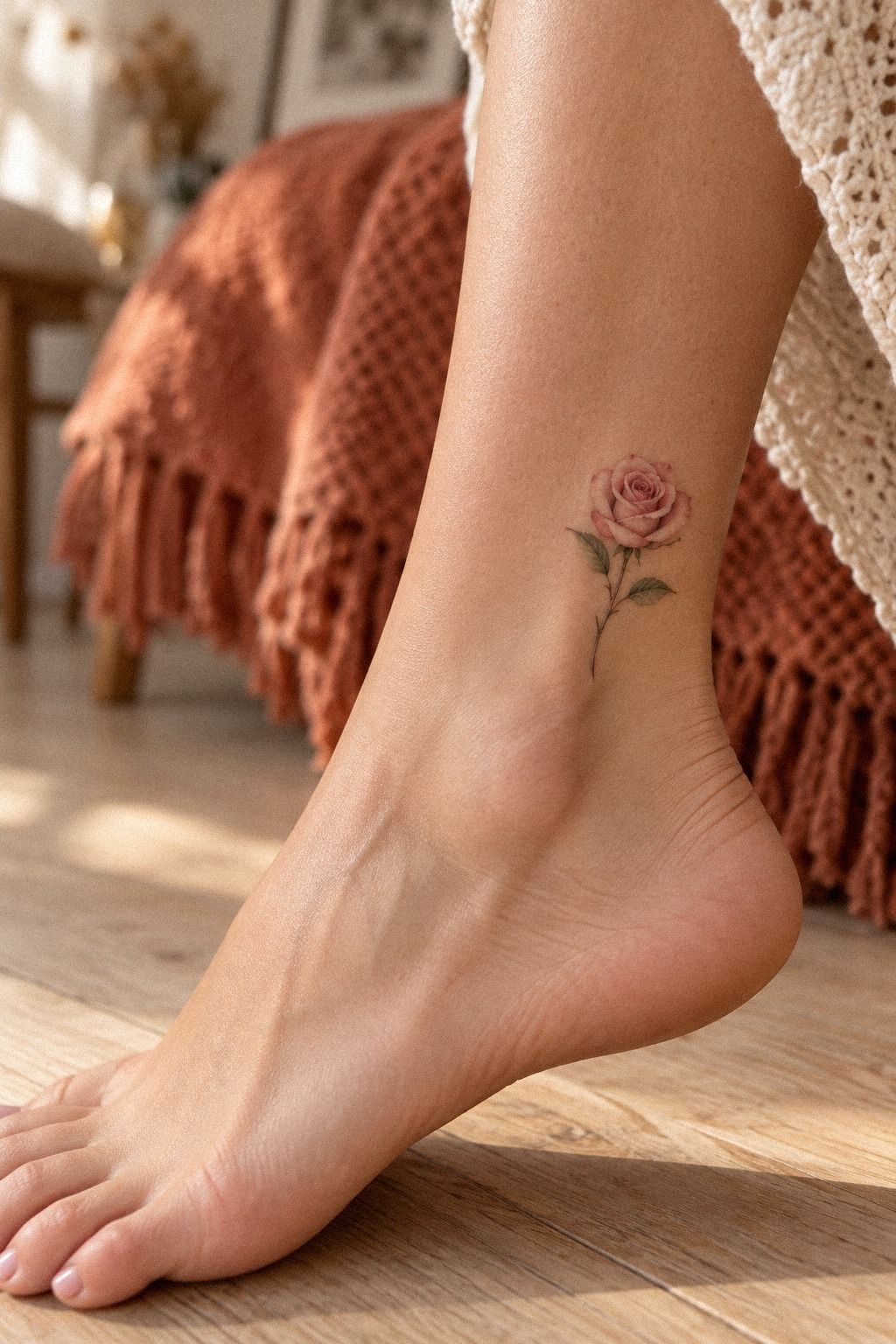
Use color as a small accent rather than a full wash. Single-color accent keeps the rose readable while giving it a more distinctive mood.
8Match Thorn Details To Your Style: Soft Curves Over Sharp Spikes
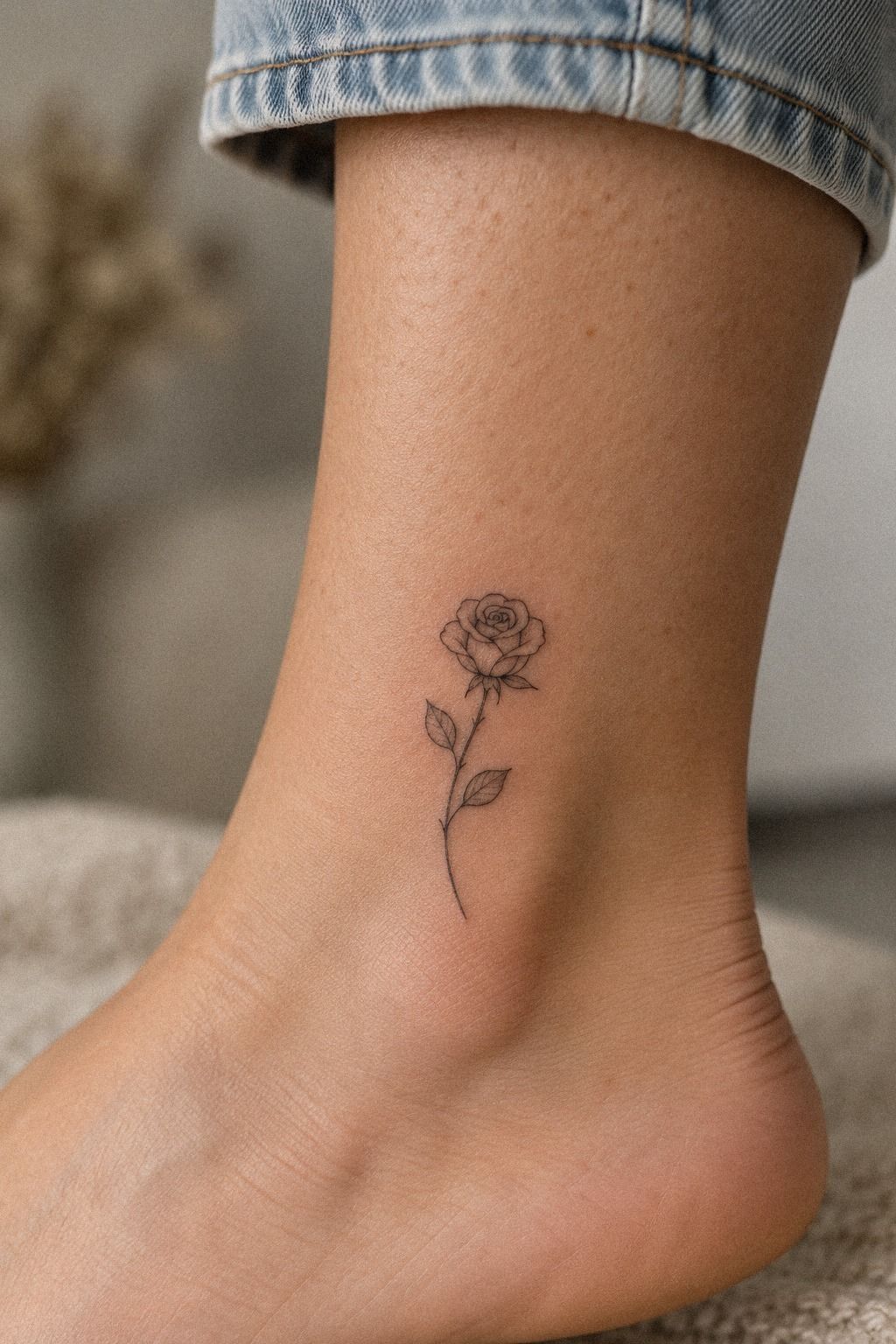
Decide whether your rose needs thorns at all. A small thorn can make the design feel fierce and symbolic, while a smooth stem may suit a more feminine or understated idea. One controlled thorn is often enough to change the mood.
Use sterile nitrile gloves and a clean stencil setup as basic signs of professional practice, but focus your design conversation on the shape. I’d choose one curved thorn over three needle-sharp spikes. The curved version feels expressive without making the flower look aggressive.
Place the thorn where it won’t vanish into a crease or rub against a bra line. Your artist can angle it toward open skin, which helps the detail remain visible. If you want to compare hand placements, look through these small side hand tattoos and notice how exposed details need stronger shapes.
Would a thorn still matter if nobody else saw it? If the answer is yes, keep it. That private meaning makes the choice personal rather than reactive, and your tattoo doesn’t need to explain itself to everyone.
9Test Unique Rose Tattoos On Paper: The Rotation Check
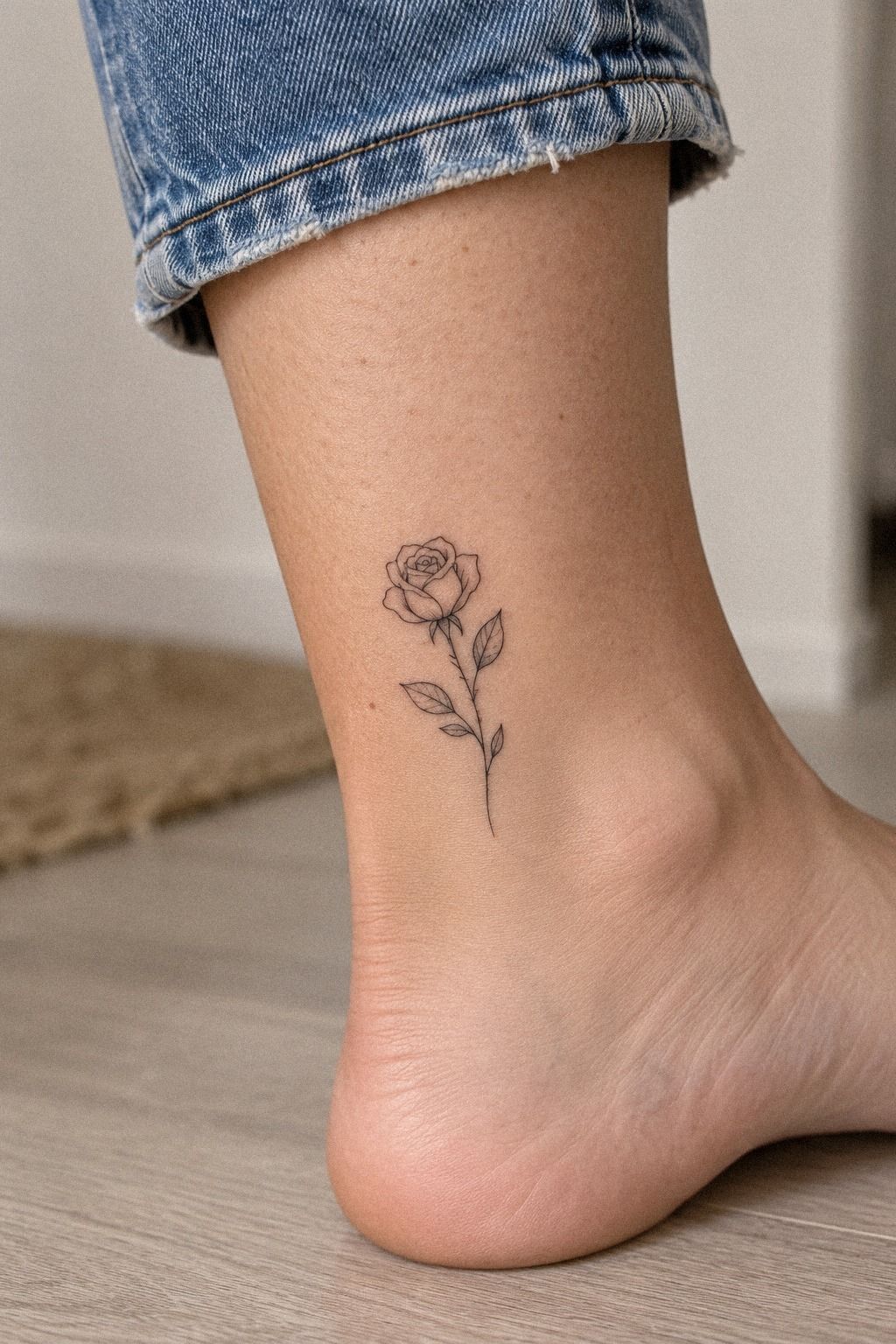
Print or draw your favorite design at the approximate size your artist recommends, then test it on your skin with a temporary transfer. Temporary placement test can reveal whether the rose feels balanced when your wrist, neck, or torso moves.
10Protect Delicate Linework During Healing: The Three-Stage Care Plan
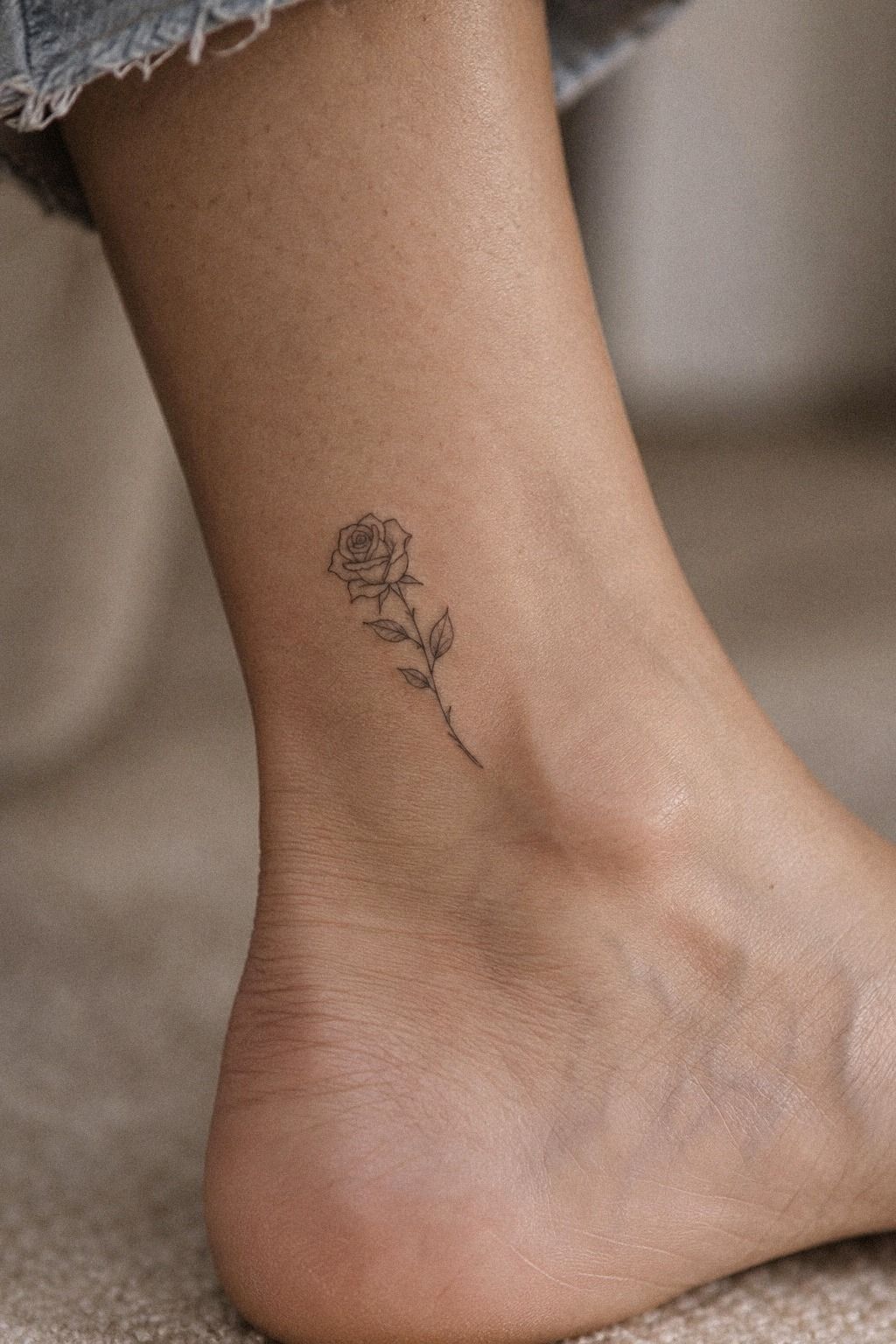
Follow your artist’s aftercare instructions first, because coverings and products can vary. The skin may look softer while it settles, and that shift is normal. Your job is to protect the area rather than constantly inspect it.
Wash gently with fragrance-free soap, pat dry, and use the light moisturizer your artist recommends. Surface healing usually takes about 2 to 3 weeks, while complete healing can take roughly 2 to 3 months.
During that time, avoid picking, prolonged soaking, swimming, and direct sun. Your rose needs patience more than constant touching. Don’t cover it with tight clothing unless your artist says that’s appropriate.
After the surface closes, ask when you can use sunscreen regularly. Broad-spectrum sunscreen can help protect the contrast of fine linework from unnecessary UV exposure. Black pigment with sensible placement tends to age better than overloaded micro-detail.
And don’t panic when the tattoo looks dull or flaky for a few days. That stage can feel alarming, especially with fine work, but the skin is doing its repair. Follow the care plan and contact your artist if something seems unusual.
If you’re planning a hand or finger rose, read this small arm tattoos meaning guide and think honestly about friction, washing, and sun exposure.
11Highlight Small Roses With Sharp Contrast: The Deep-Skin Read
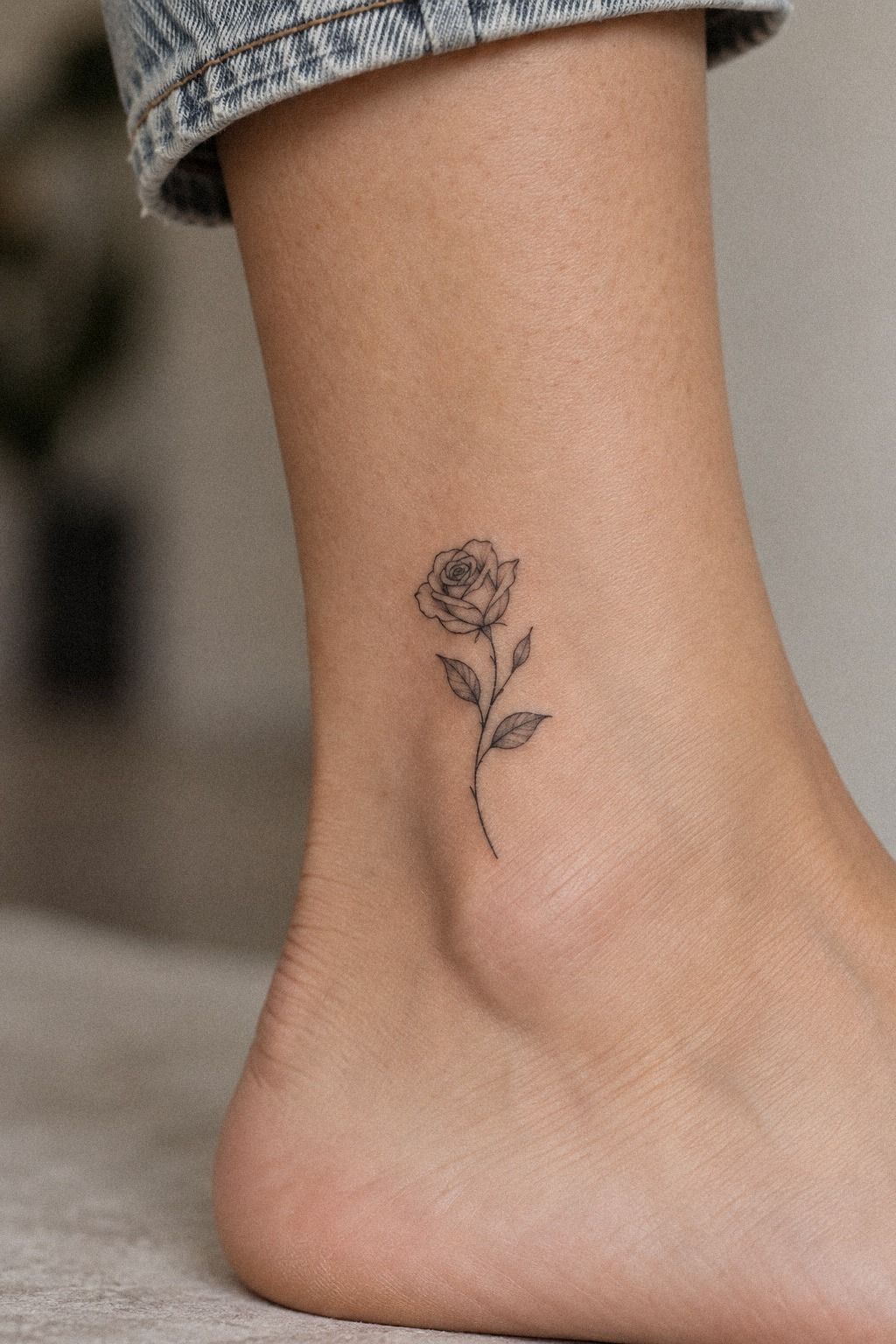
Test contrast on the actual skin tone, not a white-background mockup. A crisp outer line and intentional open areas help the bloom read clearly, while random gray shading can flatten the petals. Your artist should be comfortable showing healed work on varied skin tones.
Ask to see healed examples rather than only fresh tattoos. Black tattoo ink can look sharp immediately, but healed contrast is the information you need before you decide. I’d prioritize an artist who can explain line weight, placement, and how they approach your complexion.
If you’re budgeting carefully, put your money toward the artist’s experience and consultation rather than extra decorative details. Typical US pricing for a small rose often lands around $100 to $300, while a shop minimum may be about $50 to $100. Rates vary by artist and region, so ask for a range before you confirm.
Don’t choose the lowest quote if the portfolio doesn’t show healed, crisp work. A polished consultation, hygienic studio, and strong contrast plan are worth more than saving a little upfront. Your rose should look intentional from the first day through the long settling period.
For more ideas about personal symbolism, compare your shortlist with this small tattoos meaning guide before paying a deposit.
What I’d Decide Before Booking
I’ve changed my mind about small roses more than once. At first, I thought the most intricate sketch would feel the most personal, but the opposite happened. The rose I kept returning to had fewer petals, one curved thorn, and a stem that followed the body instead of fighting it.
Focused linework made it feel more meaningful.
Your budget matters, but it shouldn’t push you toward a rushed artist or a crowded design. A small tattoo can be affordable because it uses a clear silhouette, not because corners are cut. I’d rather see you spend around a typical $100 to $300 range on a clean, well-planned rose.
The placement decision deserves equal attention. A sternum tattoo can feel intimate and sacred, while a calf piece can be more visible and bold. Behind the ear is discreet but exposed to movement and sun.
The forearm is easier to inspect during healing, though it may be harder to hide.
What matters is the match between your daily life and your chosen image. If you work outdoors, think seriously about UV care. If you use your hands constantly, be cautious with hand and finger placements.
If you want the rose mostly for yourself, choose a location that gives you that private moment.
If you’re still weighing meaning against visibility, these small tattoos with meaning can help you compare quieter, more personal concepts.
A low quote isn’t automatically a good deal. Artist experience matters because clean placement, controlled line weight, and sound hygiene protect the result.
Ask whether the estimate includes consultation time, stencil adjustments, color, and touch-up policy. You’ll make a clearer decision when the total is written down instead of guessed from a short message.
If the price is beyond your budget, simplify the design before choosing a less experienced artist. Remove extra leaves, lettering, or color first. The rose can remain bold, expressive, and personal without every possible detail.
A stylish tattoo doesn’t need an elaborate plan. It needs a realistic quote, a thoughtful artist, and enough time to make the design readable.
Which Placement Fits Your Daily Life?
Forearm placement is practical when you want to inspect the tattoo during healing. Aftercare access is easy, and the surface usually gives a rose enough room to stay readable.
A finger or hand rose can feel edgy and iconic, but those areas experience more friction, washing, and sun. If you’re considering that direction, compare these small finger tattoos before committing.
You can also compare exposed hand shapes with these small side hand tattoos before deciding whether a discreet or visible placement feels more natural.
The sternum can feel sacred and intimate, while the calf gives you more space and visibility. Behind the ear is playful and discreet. None is universally best, so choose the placement that fits your clothes, work, movement, and comfort.
The Details I’d Leave Out
I’d leave out extra lettering unless the words are essential. Tiny lettering can lose clarity quickly, especially when it competes with petal lines.
I’d also avoid stacking dates, initials, stars, leaves, and multiple colors into one small bloom. A rose can be meaningful without becoming a coded list of memories.
If you want something more personal, change one structural element instead. A bent stem, a single thorn, or an open petal can create a stylish signature without crowding the design. This small arm tattoos meaning guide may help you compare simpler concepts.
A classic rose usually benefits from restraint. The detail you remove may be the detail that lets the central bloom stay sharp.
How to Read a Healed Portfolio
Look for healed work, consistent line weight, and designs that still have open skin between details. Healed tattoo photographs tell you more than fresh work because swelling and surface shine have faded.
Check whether the artist has experience with your preferred placement and skin tone. A fine design should look intentional after settling, not merely impressive on appointment day.
Notice the consultation quality, too. A thoughtful artist will explain what needs simplifying, where a line may spread, and how the rose should be scaled. That honesty is a meaningful sign.
Pay attention to whether the examples feel varied. One artist may be brilliant with bold traditional roses but less comfortable with a minimal, fine-line bloom.
A Short Consultation Checklist
Bring your preferred silhouette, placement idea, budget range, and three words describing the meaning. Consultation notes keep the conversation focused when you’re excited or nervous.
Ask about minimum pricing, healing instructions, touch-ups, and the artist’s experience with small roses. You don’t need to sound like an expert. You only need clear answers.
If your idea involves a discreet hand placement, these small tiny hand tattoos can help you explain the scale you like. If the artist suggests a larger version, ask what problem the extra space solves.
Bring reference images for shape, not for exact copying. Your artist should adapt the rose to your anatomy, preferred line weight, and skin tone.
What People Always Want to Know
How much does a small rose tattoo usually cost?
A small rose tattoo usually costs about $100 to $300 in the US, though a shop minimum may run about $50 to $100 and hourly rates about $100 to $250. Pricing factors include placement, color, detail, artist experience, regional pricing, and studio minimums.
Ask your artist for a range before you book. If you’re comparing a hand or wrist design, review these small side hand tattoos and decide whether the extra exposure is worth it.
Are small rose tattoos a good idea for a first tattoo?
Yes, small rose tattoos can be a strong first choice when the design has clear lines and a manageable placement. Simple silhouettes are easier to understand during the consultation and easier to protect during healing.
Forearm or calf placements may feel more approachable than ribs, feet, hands, or sternum. Your artist can help you choose a location that matches your comfort level and daily routine.
How do I choose a tattoo artist for small rose tattoos?
Choose an artist whose portfolio shows clean fine-line work, healed photographs, and experience with your preferred placement and skin tone. Portfolio consistency matters more than one striking fresh tattoo.
Look for crisp outlines, balanced negative space, hygienic practices, and a consultation where your questions receive clear answers. Don’t judge from fresh tattoos alone.
How much do small rose tattoos hurt?
Pain varies by person, but ribs, feet, hands, and sternum often feel more intense than the forearm, thigh, or shoulder. Pain sensitivity also changes with sleep, stress, hydration, and appointment length.
Eat beforehand and follow your artist’s preparation advice. You can ask for breaks, and you don’t have to prove anything by sitting through discomfort silently.
How long does a small rose tattoo take to heal?
The surface usually heals in about 2 to 3 weeks, while complete healing can take roughly 2 to 3 months. Surface healing and complete healing are different stages, so don’t rush the process.
Basic care includes gentle washing, light moisturizing, no picking, limited sun, and no swimming or prolonged soaking until your artist says it’s safe. Contact the studio if you’re worried about unusual irritation.
What’s the best placement for small rose tattoos?
The forearm and calf are practical choices because they offer readable skin, moderate visibility, and generally more tolerable sessions. Placement comfort should matter as much as the final look.
Behind the ear is discreet, sternum feels intimate, fingers fade faster with use, and ribs or feet may hurt more. Choose based on your lifestyle, not only the design. For more placement ideas, browse this small tattoos meaning guide.
Where I’d Start First
If I had to pick one step, I’d start with the single-bloom silhouette. It gives your artist clean boundaries, protects the negative space, and keeps a small rose readable as fine lines soften. A clear stencil is the best budget tool you have.
Print it, test the angle, and bring that version to your consultation. If the rose still feels right after a full day, you’re probably close to the design you want.
You don’t need the most elaborate concept. You need a rose with a crisp outline, a meaningful detail, a realistic price, and a placement that belongs to your life. Yes, this matters!